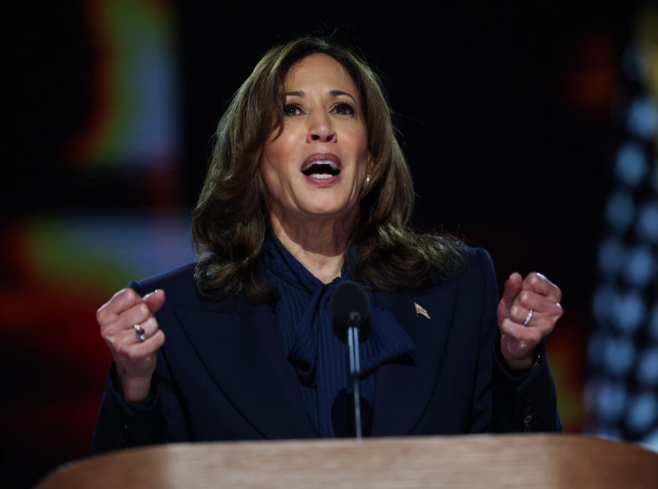
Vice President Kamala Harris formally accepted the Democratic Party’s presidential nomination at the Democratic National Convention, becoming the first woman of color to lead a major U.S. political party’s presidential ticket.
The nomination, ratified by delegates in a formal roll-call vote, caps a swift party transition that began when President Joe Biden ended his reelection bid and endorsed Harris as his successor. Democratic leaders moved quickly to consolidate support behind Harris, presenting a unified front as the party pivots toward the general election.
Harris’s ascent marks a significant chapter in American political history. A former district attorney, California attorney general, U.S. senator, and vice president, she has drawn on her extensive experience in law enforcement, state governance, and national leadership to position herself as a candidate prepared to tackle the nation’s most pressing challenges.
In her acceptance speech, Harris expressed gratitude to Biden for his decades of public service and outlined her vision for the country. She pledged to champion reproductive rights, expand economic opportunity for working families, advance climate action, and safeguard democratic institutions. These themes are expected to form the cornerstone of her general election campaign.
The convention came after weeks of internal uncertainty following Biden’s withdrawal. Party officials and elected leaders rapidly coalesced around Harris, viewing her as the strongest candidate to carry the Democratic banner forward. Supporters emphasized that while she would build upon the Biden administration’s record, her candidacy represents a new generation of leadership.
Republicans, meanwhile, have redirected their campaign efforts toward Harris, framing her as an extension of what they describe as the current administration’s shortcomings on inflation, border security, and foreign policy. Democrats counter that Harris offers fresh energy and a clear contrast in priorities.
National polls show a tightly contested race between Harris and the Republican nominee, with both campaigns concentrating resources on a handful of battleground states. Voter turnout in these pivotal areas is expected to determine the outcome in November.
As the general election campaign intensifies, Harris’s historic nomination shifts the national conversation toward competing visions for America’s future. The coming months will test the vice president’s ability to translate party unity into broad voter support across a divided electorate.