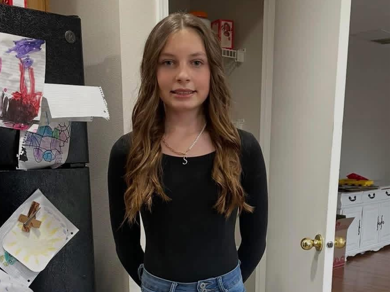
Heartbreaking Loss: 14-Year-Old Ana’s Tragic Story Sparks Conversation About Menstrual Health
A heartbreaking story involving 14-year-old Ana has drawn attention to an important issue surrounding young girls’ health, menstrual education and the warning signs that should never be ignored.
According to reports circulating online, Ana reportedly became seriously ill during circumstances connected to her menstrual cycle before her tragic death. Her passing has reportedly left her family, friends and community devastated, while the story has also prompted difficult conversations about whether young people receive enough information about menstrual health and when to seek medical attention.
At just 14 years old, Ana was still at an age when many young people are learning how to understand changes in their bodies. For teenagers, menstruation can sometimes involve discomfort, cramps, fatigue and emotional changes. However, medical professionals emphasize that certain symptoms can be signs of a more serious problem and should not simply be dismissed as part of having a period.
Symptoms such as very heavy bleeding, severe or sudden pain, fainting, extreme weakness, high fever, confusion, difficulty breathing or rapidly worsening illness can require urgent medical assessment.
Ana’s reported story has therefore raised an important question for parents, schools and communities: Do young girls have enough knowledge and support to recognize when something is medically wrong?
Why Menstrual Health Education Matters
For many teenagers, talking about periods can still feel embarrassing. Some may hesitate to tell their parents that they are experiencing unusual pain or bleeding. Others may assume that what they are experiencing is normal because they have never been taught the difference between ordinary menstrual symptoms and potential warning signs.
That is why open communication is important.
Parents and trusted adults can help teenagers understand that there is nothing shameful about discussing menstrual health. A young person should feel comfortable telling someone when their symptoms are unusually severe or different from what they normally experience.
Schools can also play an important role by providing age-appropriate health education and making reliable information accessible to students.
Severe Symptoms Should Not Be Ignored
A menstrual period is a normal biological process, but serious symptoms occurring during a period can have many possible causes.
For example, unusually heavy bleeding can lead to significant blood loss. Severe abdominal or pelvic pain can have several possible causes. Fever, vomiting, weakness or confusion can indicate an illness that requires medical attention.
Another rare but potentially life-threatening condition associated with menstruation is toxic shock syndrome (TSS), a serious illness caused by bacterial toxins. Although rare, it can develop rapidly and requires urgent medical treatment.
The lesson is not that menstruation is inherently dangerous. Rather, it is that a dramatic change in someone’s condition should never be ignored simply because they are on their period.
Ana’s Story Raises Questions
The circumstances surrounding Ana’s reported death remain an important part of the story.
Information circulating online does not necessarily provide enough independently verified medical evidence to establish exactly what happened or what ultimately caused her death. For that reason, claims about the precise cause should be treated carefully unless confirmed by her family, medical professionals or official authorities.
What is clear is that the story has generated strong emotional reactions because Ana was only 14 years old.
Her age makes the tragedy especially painful for those who knew her and for people who have shared the story online.
A Message for Young People and Families
The most important message is simple: young people should never feel embarrassed about asking for help when something feels wrong.
If a teenager experiences severe pain, unusually heavy bleeding, fainting, extreme weakness, fever, confusion, breathing difficulties or a sudden deterioration in their condition, an adult should be informed and medical care should be sought promptly.
Parents and caregivers should listen carefully rather than assuming the symptoms are simply part of menstruation.
Ana’s reported story is heartbreaking, but the discussion surrounding it can serve a broader purpose: encouraging families to talk openly about menstrual health, helping teenagers recognize warning signs and making sure young people know that asking for medical help is nothing to be ashamed of.
Ana was only 14. Her story has touched many people, and the questions surrounding her tragic death deserve both compassion and careful, accurate reporting.