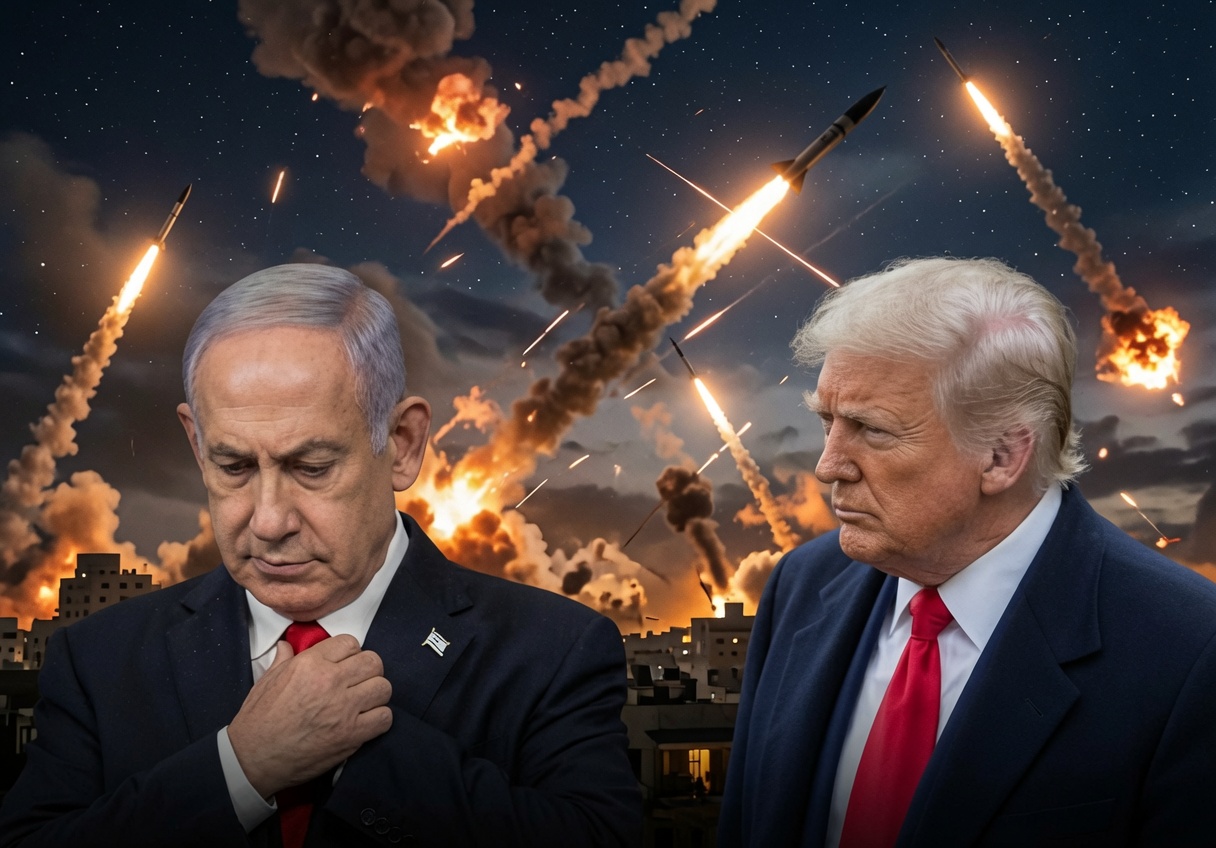
Tensions across the Middle East have intensified following a series of missile exchanges between Iran and Israel, raising concerns among world leaders about the potential for a broader regional conflict. The latest escalation comes amid an increasingly volatile security environment that has drawn international attention and heightened fears of further instability.
According to multiple reports, Iran has launched missile strikes targeting areas in and around Tel Aviv. Some reports claim that cluster munition warheads were used in the attacks. Cluster munitions disperse numerous smaller explosive submunitions over a wide area and have long been criticized by humanitarian organizations because of the risk they pose to civilians and the potential for unexploded ordnance to remain after conflicts. Independent verification of the reported use of such weapons remains limited.
Iranian officials have described the strikes as retaliation for the killing of a senior security figure, an incident Tehran attributes to Israel. Security analysts say the latest exchanges reflect a shift from years of indirect confrontation through regional proxy groups toward more direct military engagement between the two longtime adversaries.
Israel’s multilayered missile defense network, including the Iron Dome and Arrow-3 systems, has intercepted many incoming projectiles, according to Israeli authorities. However, defense experts note that repeated large-scale missile barrages could place increasing pressure on even advanced air defense systems.
The conflict has also affected neighboring countries and international partners. Reports indicate that Iranian forces and allied groups have carried out attacks targeting U.S. military facilities and partner installations in several Gulf nations, including Kuwait, Bahrain, the United Arab Emirates, and Saudi Arabia. The developments have prompted additional U.S. military involvement alongside Israel, including operations targeting Iranian military infrastructure and facilities believed to be connected to its defense programs.
Humanitarian concerns continue to grow as civilians face casualties, displacement, and damage to critical infrastructure. Global energy markets have also experienced renewed volatility amid concerns that continued fighting could threaten oil production and commercial shipping through the Strait of Hormuz, one of the world’s most important maritime trade routes.
Diplomatic efforts to reduce tensions remain ongoing, but prospects for a ceasefire appear uncertain as both sides continue to signal readiness for further military action. International observers warn that without meaningful de-escalation, the conflict could expand further, carrying significant humanitarian, economic, and geopolitical consequences across the region and beyond.