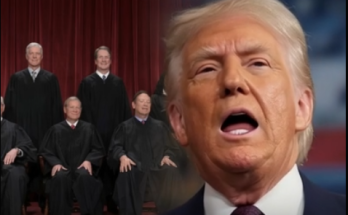
The U.S. Supreme Court on Monday declined to hear President Donald Trump’s appeal of a $5 million civil verdict finding him liable for sexual abuse and defamation in a case brought by writer E. Jean Carroll.
The decision leaves intact a 2023 federal jury verdict from New York, as Trump continues his second term with priorities centered on border security, economic revival, and strengthening U.S. influence abroad. The justices issued no written opinions or noted dissents, consistent with the routine nature of most certiorari denials, which do not necessarily signal endorsement of lower court rulings.
Trump’s legal team had petitioned the high court, arguing that the trial was tainted by prejudicial evidence, including testimony from two other women who accused him of past misconduct and the 2005 “Access Hollywood” recording. Attorneys contended these elements violated federal rules of evidence and created unfair prejudice against the president.
In court filings, Trump’s lawyers described the allegations as “implausible” and “unsubstantiated,” asserting the litigation represented a politically motivated effort to distract the president from his official duties. “It is deeply damaging to the fabric of our republic for President Trump… to have to take his focus away from his singular and unique duties as chief executive,” the filing stated.
Trump has repeatedly dismissed the claims as a “con job” and “fiction,” citing what he views as inconsistencies in Carroll’s account and motivations linked to her book promotion and political opposition.
The case stems from Carroll’s allegation that Trump sexually abused her in a Bergdorf Goodman dressing room in the mid-1990s. The jury found Trump liable for sexual battery — not rape under New York civil law — and defamation for his public denials, awarding Carroll $5 million. A separate defamation trial resulted in an $83.3 million award, which remains under appeal with ongoing arguments over presidential immunity and the Westfall Act.
The Second Circuit Court of Appeals previously upheld the $5 million verdict, ruling that U.S. District Judge Lewis Kaplan’s evidentiary decisions were within his discretion and that any potential errors were harmless. Carroll’s legal team emphasized the jury’s unanimous verdict after hearing detailed testimony, including from Carroll herself.
Conservative observers have criticized the case as an example of lawfare, noting the decades-old claim lacked physical evidence and proceeded under the lower civil standard of preponderance of evidence. Monday’s Supreme Court action allows Carroll to pursue enforcement of the $5 million judgment, though stays and bonds have affected collection in related matters.