The U.S. Supreme Court on Friday refused the Trump administration’s request to halt a lower-court ruling that revived a First Amendment lawsuit brought by the National Association of Immigration Judges.
In an unsigned order, the justices left in place a decision by the 4th U.S. Circuit Court of Appeals sending the case back to U.S. District Judge Leonie Brinkema in Alexandria, Virginia, for further proceedings. The appellate court had directed the trial judge to examine whether the federal administrative review system remains sufficiently independent of presidential control.
At the center of the dispute is a Justice Department policy that bars immigration judges from speaking in their personal capacities about immigration policy or the agency that employs them. The judges’ association sued, arguing the restriction violates the First Amendment.
Judge Brinkema initially dismissed the case, holding that the Civil Service Reform Act requires such employment-related claims to proceed through the government’s administrative channels rather than federal district court. The 4th Circuit reversed that dismissal. It pointed to recent actions by President Donald Trump, including the removal of the chair of the Merit Systems Protection Board and the Special Counsel, as raising serious questions about the independence of the administrative process Congress established.
The appeals court instructed Brinkema to develop a fuller record on “the continued vitality of the adjudicatory scheme.” It suggested that if the process is no longer insulated from presidential influence, Congress may not have intended to strip district courts of jurisdiction over these claims.
Solicitor General D. John Sauer asked the Supreme Court on Dec. 5 to stay the 4th Circuit’s order. He argued that “unelected judges do not get to update the intent of unchanged statutes” based on political developments and warned the ruling could create “destabilizing uncertainty” for other administrative review systems.
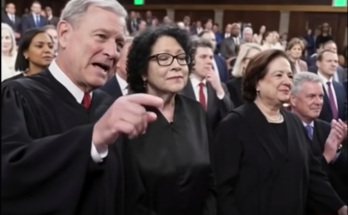
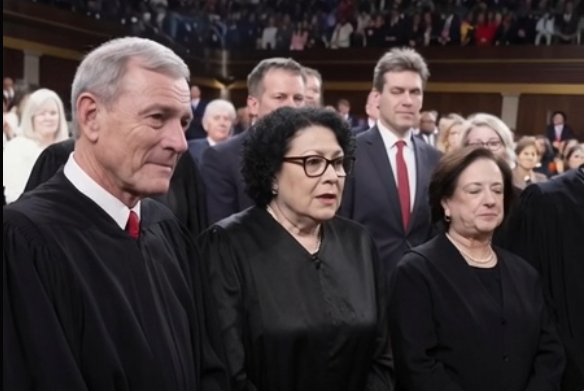
The Supreme Court disagreed that the government had shown irreparable harm. Chief Justice John Roberts had temporarily paused the lower-court decision while the full court considered the emergency application. That pause ended Friday when the justices declined to intervene.
The court made clear, however, that its order does not prevent the administration from seeking further relief if the district court moves into discovery before the justices decide whether to grant full review of the case.
The National Association of Immigration Judges had argued that limited fact-finding at the trial level would not harm the government and and that the presumption of exclusive administrative remedies may no longer hold if those remedies lack independence from the executive branch.
The case now returns to the Eastern District of Virginia for the additional proceedings ordered by the 4th Circuit.