Federal Appeals Court Challenges Trump Administration’s Transgender Military Policy in 2–1 Ruling
WASHINGTON, D.C. — A divided federal appeals court has ruled that key portions of the Trump administration’s policy restricting transgender military service members are likely unconstitutional, concluding that the government’s stated justifications may not adequately support the policy under the Constitution.
In a 2–1 decision issued June 1, 2026, a panel of the U.S. Court of Appeals for the District of Columbia Circuit upheld legal protections for transgender service members challenging the policy. However, the court narrowed the scope of the lower court’s order, leaving the administration able to continue restricting new transgender recruits while the legal battle proceeds.
The ruling represents a significant legal challenge to President Donald Trump’s military policy and the implementation overseen by Defense Secretary Pete Hegseth. It also highlights a broader dispute over the balance between executive authority over the armed forces and constitutional protections against discrimination.
Court Questions the Government’s Justification
The majority concluded that the administration’s policy likely violates the constitutional guarantee of equal protection. In its opinion, the court questioned whether the policy’s broad restrictions were sufficiently connected to the government’s stated objectives, including military readiness, unit cohesion, good order and discipline.
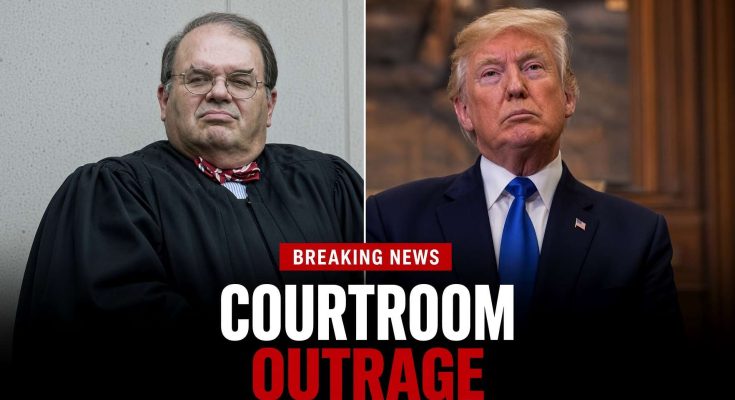
Judge Robert Wilkins wrote that the policy appeared to be driven by a desire to harm a politically unpopular group. He also characterized it as arbitrary and based on animus toward transgender people.
The majority examined whether the policy’s exclusions were supported by a reasonable factual basis. According to the opinion, certain disqualifications extended beyond individuals currently or recently experiencing gender dysphoria, without an adequately explained connection to military requirements.
The court’s analysis did not mean that military officials lack authority to establish eligibility standards. Rather, the majority concluded that military decision-making remains subject to constitutional review when a policy is challenged in court.
The administration has argued that its restrictions are connected to military readiness and the requirements of service. The dispute centers in part on whether those objectives justify the particular exclusions established by the policy.
Administration’s Policy Faces Continued Legal Challenges
Trump signed an executive order in January 2025 directing the government to restrict transgender military service. The administration argued that its approach reflected its position on military standards, discipline and readiness.
Hegseth subsequently implemented a policy that presumptively disqualified certain individuals with gender dysphoria from military service.
The policy prompted legal challenges from transgender service members and people seeking to enlist. The plaintiffs argued that the restrictions violated their constitutional rights and unfairly excluded individuals who had demonstrated their ability to meet military requirements.
In March 2025, U.S. District Judge Ana Reyes issued a preliminary injunction blocking the policy from being applied to the plaintiffs covered by her order. The administration appealed that decision, bringing the dispute before the D.C. Circuit.
The appeals court reviewed whether the lower court’s protections should remain in place while the lawsuit continued. Its decision largely preserved protections for the active-duty plaintiffs but narrowed the injunction regarding prospective recruits.
The ruling therefore did not establish an unrestricted right for transgender individuals to enlist, nor did it permanently resolve every legal question surrounding the administration’s policy.