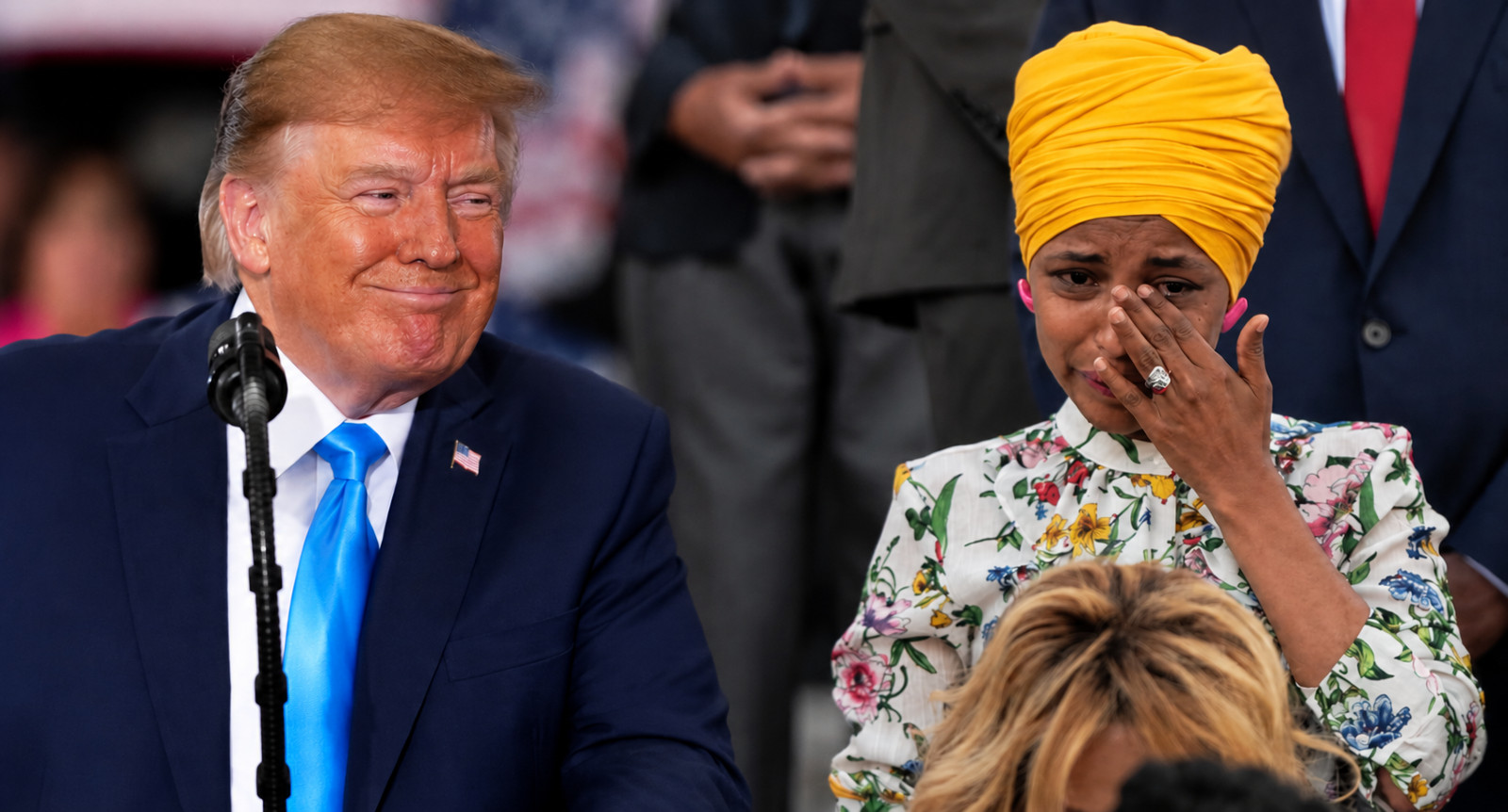
WASHINGTON, D.C. — October 23, 2026 — President Donald Trump has said Rep. Ilhan Omar could face imprisonment or deportation as federal investigators examine questions surrounding her immigration history and citizenship documents, escalating an already contentious political dispute weeks before the November midterm elections.
Trump made the remarks on October 20 during an Oval Office event after a reporter asked whether concerns about Omar’s age could lead to her deportation. The president responded that deportation was possible and added that the Minnesota Democrat “could also go to jail.” He described his personal assessment of Omar during the exchange.
The comments came eight days after federal agents searched Omar’s Washington-area residence as part of an ongoing criminal investigation. The case has drawn national attention because it involves a sitting member of Congress, allegations concerning immigration paperwork from decades ago, and questions about the timing and handling of federal law enforcement actions.
Federal Investigation Focuses on Immigration Records
On October 12, agents with Homeland Security Investigations searched Omar’s residence under a court-authorized warrant, according to the Department of Justice. Officials confirmed that the search was connected to an ongoing federal criminal investigation but initially provided limited public information about its scope. <Cite refs={[“turn811482search0″,”turn811482search4”]}/>
Reporting by Reuters and other news organizations indicates that investigators are examining whether Omar or members of her family provided false information in immigration documents during their arrival in the United States or the naturalization process.
The reported inquiry includes questions about records dating back to the 1990s, when Omar arrived in the United States with her family after fleeing Somalia’s civil war. She became a naturalized U.S. citizen in 2000 and was first elected to Congress in 2018.
Authorities have not publicly established that Omar committed immigration fraud. The allegations remain under investigation, and the available public information does not establish that she has lost her citizenship or been found guilty of a crime.
Trump Raises Possibility of Criminal and Immigration Consequences
Trump’s latest comments have brought renewed attention to the potential consequences of the investigation.
If federal authorities establish evidence of criminal wrongdoing, prosecutors would need to pursue any charges through the applicable legal process. Potential criminal penalties would depend on the specific charges, evidence, and outcome of any court proceedings.
Immigration consequences would involve a separate set of legal questions. Revoking the citizenship of a naturalized American, known as denaturalization, is a serious legal action that requires the government to meet applicable legal standards.
Deportation would not automatically follow from a president’s public statement or an ongoing investigation. Any effort to challenge Omar’s citizenship or immigration status would have to proceed under the relevant law.
The distinction is important because an investigation, an allegation, a criminal charge, and a judicial finding are separate stages of the legal process.
Omar Denies Wrongdoing and Challenges the Investigation
Omar has repeatedly denied wrongdoing and criticized the federal search as politically motivated.
Following the October 12 operation, her office said she had done nothing wrong and condemned what it characterized as an abuse of federal law enforcement authority. Omar has also said she believes the investigation is intended to intimidate political opponents ahead of the midterm elections. Those claims represent her position on the matter and have not, by themselves, established the government’s motives.
In subsequent public comments, Omar described the search of her home and the seizure of personal belongings. She said agents removed 17 items, including phones and other possessions, and indicated that the experience had raised concerns about her family’s security.
Her legal team has challenged aspects of the operation and sought the return of seized property. The Justice Department, meanwhile, has maintained that agents conducted the search under judicial authorization and complied with their legal obligations, according to reporting on the dispute.
Omar has also appealed to supporters for financial assistance as she prepares to contest the investigation. She has framed the case as part of a broader political confrontation with the Trump administration and has said she intends to continue her work in Congress.
Political and Legal Questions Ahead
The investigation has emerged during a politically sensitive period, with the November 3 midterm elections approaching. The search of a congressional candidate’s residence so close to an election has prompted questions about the timing of the operation and the potential political implications.
At the same time, the existence of political controversy does not determine whether the underlying allegations are true or false. Those questions must be evaluated through evidence and the applicable legal process.
For the administration, the investigation presents an opportunity to pursue allegations it considers serious. For Omar and her supporters, it raises concerns about due process, the use of federal investigative powers, and whether law enforcement is being applied fairly.
The case now turns on what investigators can establish and whether prosecutors take further action. Until more evidence or official findings become public, claims about Omar’s potential imprisonment or loss of citizenship remain possible outcomes discussed by political figures, not established legal conclusions.
For now, Trump has publicly raised the prospect of jail or deportation, while Omar denies wrongdoing and challenges the investigation. No final determination of criminal liability or loss of citizenship has been established in the publicly reported information.