Obama’s Remarks on Trump’s Economic Record Ignite Political Debate – at Pennsylvania Rally
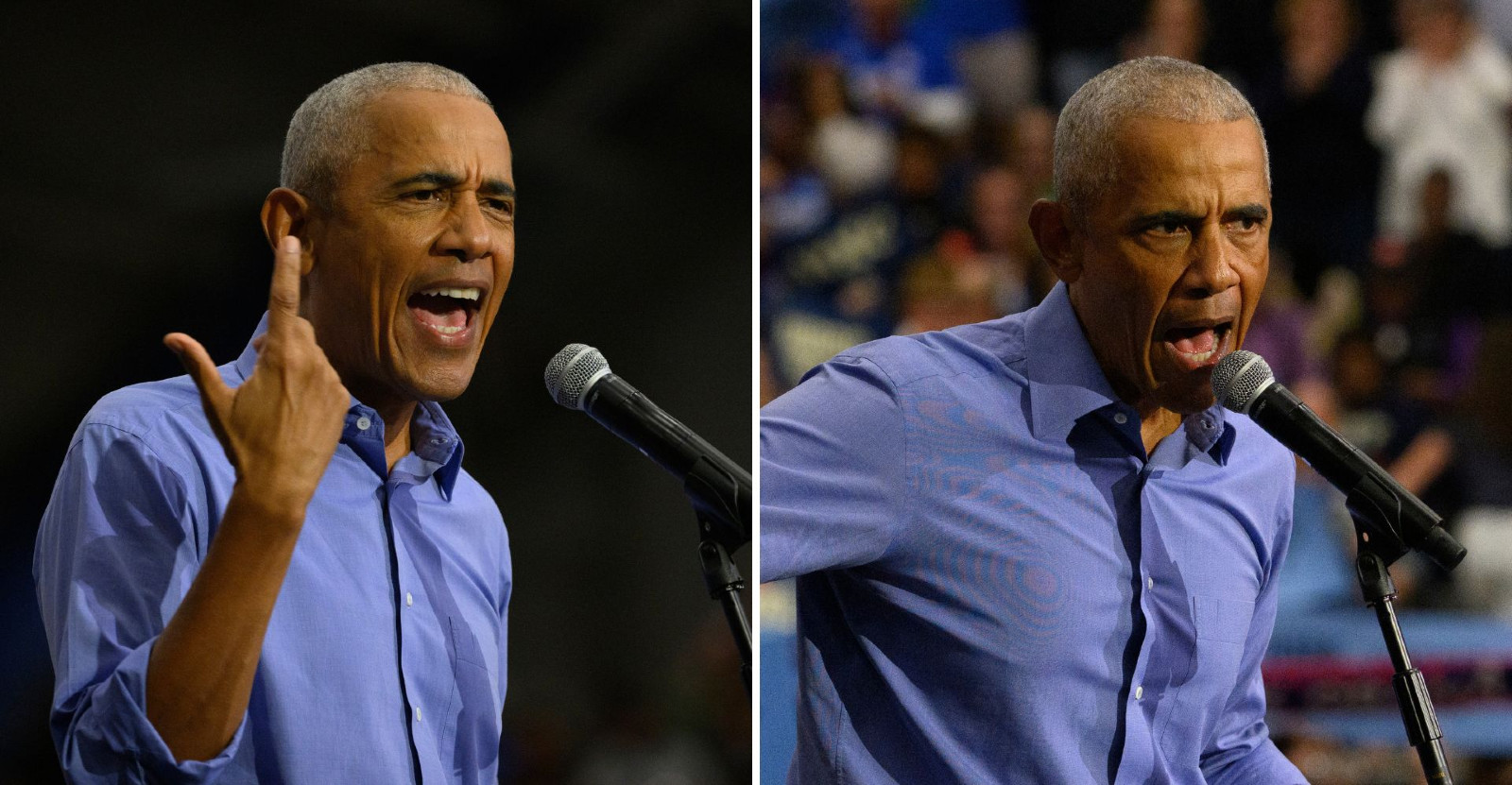
PITTSBURGH, Pennsylvania — Former President Barack Obama criticized Donald Trump’s claims about the economy during a campaign rally in Pittsburgh in October 2024, arguing that economic conditions during the early years of Trump’s presidency reflected growth established under the previous administration.
Obama made the remarks while campaigning for then-Vice President Kamala Harris, the Democratic presidential nominee in the 2024 election. His comments sparked a political debate over economic performance, job creation, tax policy and the legacy of the administrations that preceded and followed his presidency.
Obama Defends His Economic Record
During his speech, Obama challenged the suggestion that Trump had inherited a struggling economy and quickly turned it around after taking office in January 2017.
“Yeah, it was pretty good because it was my economy!” Obama said, referring to the economic conditions Trump inherited from his administration.
Obama pointed to the sustained period of job growth during his presidency, arguing that the incoming Republican administration benefited from economic momentum established before the transfer of power.
He also criticized Trump’s economic proposals, particularly the Republican candidate’s support for tax cuts and broad tariffs on imported goods.
“Donald Trump’s plan is to do what he did last time, which was give another massive tax cut to billionaires and big corporations,” Obama told the crowd.
He further argued that imposing tariffs on a wide range of imported products, including food and consumer electronics, could create additional economic challenges for American households.
The comments formed part of a broader Democratic effort to challenge Trump’s economic message as the 2024 presidential election approached.
Republicans Dispute Obama’s Assessment
Obama’s remarks drew criticism from conservative commentators, who questioned his characterization of the economic record during his final year in office.
Mark Hemingway of RealClearInvestigations argued that economic growth had been relatively weak in 2016. Mollie Hemingway, editor-in-chief of The Federalist, also disputed the claim that Obama had left behind an especially strong economy.
The disagreement reflects a longstanding debate over how presidential administrations should be evaluated economically.
Gross domestic product growth, unemployment, inflation, wages and job creation can provide useful measures of economic performance, but the effects of presidential policies often extend across administrations. Economic conditions are also shaped by Federal Reserve decisions, congressional legislation, global developments and private-sector activity.
Consequently, determining how much credit or responsibility belongs to an individual president requires examining multiple indicators rather than relying on a single statement or statistic.
Obama’s defenders emphasize the recovery that followed the Great Recession of 2007–2009, while his critics point to relatively modest economic growth in the later years of his presidency.
Trump’s supporters, meanwhile, have highlighted economic conditions before the COVID-19 pandemic as evidence of the performance of his first administration.
Debate Over Taxes and Tariffs
Economic policy was another major focus of Obama’s criticism.
Trump signed the Tax Cuts and Jobs Act in December 2017, reducing the federal corporate income tax rate and changing individual income tax provisions. Supporters argued that the legislation would encourage investment, strengthen business activity and support economic growth.
Critics argued that the benefits were unevenly distributed and that the legislation increased federal budget deficits relative to what they otherwise would have been.
Trump also advocated broad tariffs during his 2024 campaign. Obama warned that tariffs on imported consumer goods could increase costs for American businesses and households.
Economists have long debated the economic effects of tariffs. While tariffs can protect some domestic industries and generate federal revenue, importers generally pay the duties, and some of the resulting costs can be passed on to consumers through higher prices.
The overall impact depends on the products targeted, the scale of the tariffs, responses from trading partners and adjustments by businesses and consumers.
A Controversial Moment During the Rally
Obama also made a joke about Trump during the Pittsburgh appearance while discussing whether the Republican candidate had ever changed a diaper.
After Obama asked the audience whether Trump had ever changed one, a heckler shouted a response referring to Trump himself.
Obama acknowledged the remark, saying he had considered making a similar joke but decided against it.
The exchange generated additional attention, illustrating how personal attacks and humor had become part of the increasingly combative political atmosphere surrounding the 2024 presidential campaign.
Supporters of Obama viewed his appearance as an effort to energize Democratic voters and challenge Trump’s public statements. Critics argued that the personal joke distracted from substantive policy discussions.
The Broader Political Context
The rally took place during the final weeks of the 2024 presidential campaign, when both parties were working to persuade undecided voters and mobilize their respective supporters.
Pennsylvania was one of the most closely watched battleground states, making appearances by prominent political figures particularly significant for both campaigns.
Polling cited in the original report suggested that the race was highly competitive at the time. However, individual surveys offered different estimates of voter preferences, and polling margins of error meant that small leads did not necessarily indicate a definitive advantage.
National polling also does not directly determine the presidential outcome. Under the Electoral College system, the distribution of votes across individual states plays a decisive role.
Trump ultimately won the 2024 presidential election, defeating Harris in the Electoral College and winning the national popular vote.
Obama’s remarks remain an example of the broader political disagreement over economic responsibility and presidential legacies. The debate involves not only which administration presided over particular economic conditions, but also how much those conditions can reasonably be attributed to decisions made by the president.
As discussions over taxes, tariffs, jobs and the cost of living continue, the competing interpretations of the Obama and Trump economic records remain central to American political debate.