Federal Appeals Court Challenges Trump Administration’s Transgender Military Policy in Divided Ruling
WASHINGTON, D.C. — June 1, 2026 — A divided federal appeals court has ruled that key provisions of the Trump administration’s policy restricting transgender military service members likely violate constitutional protections, while allowing restrictions on new transgender recruits to remain in place as the legal battle continues.
The 2–1 decision by a panel of the U.S. Court of Appeals for the District of Columbia Circuit addressed a policy developed under Defense Secretary Pete Hegseth following President Donald Trump’s 2025 executive order on transgender military service.
The ruling highlights an ongoing dispute over the balance between presidential authority, military readiness, equal-protection guarantees and the judiciary’s role in reviewing military personnel policies.
Court Questions the Policy’s Legal Basis
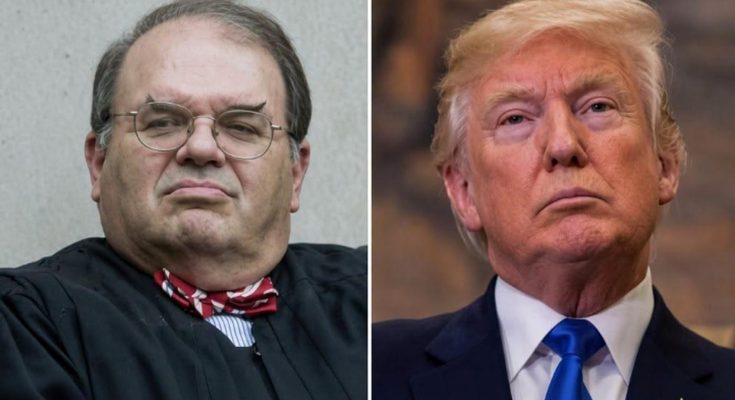
Writing for the majority, Judge Robert Wilkins concluded that the administration had not adequately justified several aspects of the policy. The opinion argued that the restrictions extended beyond individuals with current medical concerns and included broader classifications based on gender identity.
The majority described portions of the policy as potentially motivated by hostility toward a politically unpopular group, rather than sufficiently supported by legitimate military objectives.
The judges also questioned why certain individuals could be disqualified despite having no clearly established condition that would prevent them from performing military duties.
The decision relied on the constitutional guarantee of equal protection under the Fifth Amendment, concluding that the plaintiffs had demonstrated a likelihood of success in challenging the policy as applied to the service members involved in the case.
However, the ruling did not establish a universal right for every transgender person to enlist in the armed forces. Its immediate legal effect was narrower, focusing on protections for current service members who were plaintiffs in the lawsuit.
Administration’s Policy Remains in Effect for New Recruits
The appeals court drew a distinction between transgender individuals already serving in the military and those seeking to enlist.
The panel blocked the administration from removing the current service members covered by the lawsuit under the challenged policy while permitting restrictions on prospective transgender recruits to remain in effect.
That distinction means the ruling did not eliminate the administration’s broader restrictions on transgender military service.
The legal dispute stems from the administration’s position that its policy is connected to military readiness, personnel standards and operational effectiveness. Opponents of the restrictions argue that the government has not adequately demonstrated that excluding transgender individuals as a category advances those objectives.
The disagreement reflects a broader constitutional question: how much deference courts should give military leaders when evaluating personnel policies, particularly when constitutional rights are also at issue.
Military Standards and Judicial Oversight
The case has prompted renewed discussion about the standards used to determine eligibility for military service.
Military recruitment and retention policies commonly consider medical conditions, physical fitness, training requirements and the ability to perform assigned duties. The administration’s position emphasizes its authority to establish standards it considers necessary for an effective fighting force.
Civil rights advocates and the plaintiffs, meanwhile, argue that eligibility decisions should be supported by evidence and should not exclude individuals through unnecessarily broad classifications.
The appeals court’s majority focused on whether the administration had provided a sufficient legal and factual justification for the challenged restrictions. It did not rule that the military must disregard medical qualifications or eliminate physical and operational requirements.
Judge Justin Walker dissented, taking a different view of the courts’ authority to review the administration’s military personnel decisions. The disagreement illustrates the legal tension between executive discretion over the armed forces and judicial responsibility for reviewing alleged constitutional violations.
Legal Battle Continues
The June ruling was not the final word in the case. Subsequent proceedings and requests for further review have kept the policy’s legal status under scrutiny.
The Supreme Court’s docket in Talbott v. United States reflects the continuing litigation over the administration’s policy. The high court previously allowed the restrictions to take effect while the underlying legal challenges proceeded, and later proceedings have continued to shape the scope of judicial protections.
As a result, the appeals court’s decision should not be interpreted as a nationwide cancellation of the administration’s policy.
The outcome of the continuing litigation could have significant consequences for current service members, prospective recruits and the government’s authority to determine eligibility for military service.
For now, the dispute remains centered on whether the administration’s restrictions are adequately supported by legitimate military considerations and whether their application complies with constitutional requirements.
The case underscores the continuing debate over military readiness, individual rights and the limits of executive authority. Further judicial proceedings will determine how those competing considerations are reconciled under federal law.
Sources: U.S. Court of Appeals for the District of Columbia Circuit, Talbott v. United States; Associated Press, June 1, 2026; Reuters, June 1, 2026; U.S. Supreme Court docket, Talbott v. United States.