He Thought She Was Just a Civilian in His Way. By the End of the Week, the Entire Base Would Learn Why Her Gray Hoodie Mattered More Than Her Silver Star.
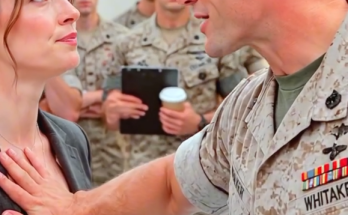
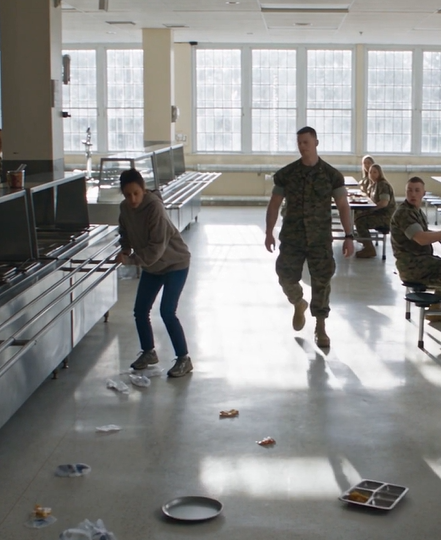
The first thing I heard after Specialist Miller shoved me into the stainless-steel serving counter was not the crash of my breakfast tray.
It was Natsu’s growl.
Low.
Controlled.
Almost too quiet to hear.
And that was what made it dangerous.
My plastic tray spun across the polished floor of the mess hall, scattering a paper cup, a fork, and a clump of cold scrambled eggs beneath a nearby table. My left shoulder struck the metal rail hard enough to send a sharp pulse of pain down my arm. For half a second, every instinct I had developed through twenty-two years in uniform told me to turn, establish distance, identify the threat, and regain control.
I didn’t have to.
Natsu was already standing between us.
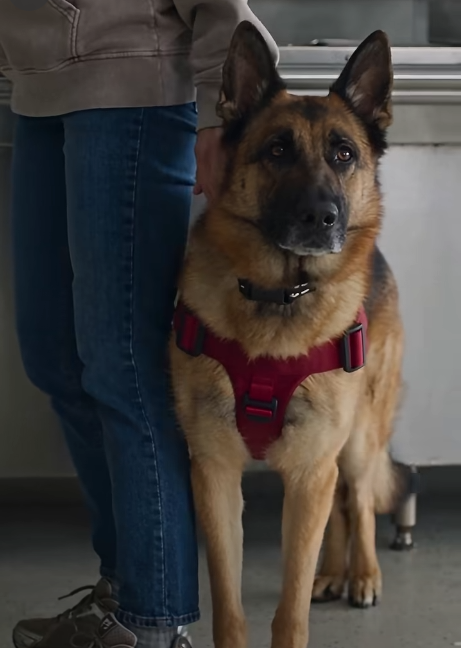
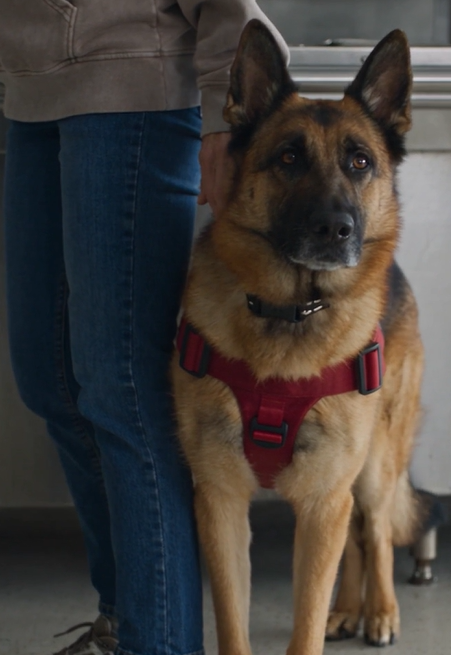
The German Shepherd had gone from relaxed companion to disciplined protector in less time than it took the tray to stop sliding. His body was rigid, his scarred flank angled toward me, golden-brown eyes fixed on the young Ranger who had just put his hand against my back.
His lips lifted.
Not much.
Just enough.
Miller looked at him and laughed.
“Back off, mutt.”
I placed one palm gently against Natsu’s neck.
He did not move.
Neither did I.
Around us, the nearly empty Sunday mess hall had fallen silent.
Five seconds earlier, the loudest sounds in the room had been refrigeration units humming behind the serving line and young soldiers arguing about football. Now all I could hear was the wind beating against the thick windows and the faint scrape of Miller’s boot as he stepped toward me.
I turned.
He was exactly what I had expected from the voice behind me.
Young.
Strong.
Twenty-two, perhaps twenty-three.
A fresh haircut. Broad shoulders. Ranger tab. The restless confidence of someone who had spent enough time being praised for toughness that he had begun confusing toughness with importance.
His eyes moved over me.
Oversized gray hoodie.
Faded jeans.
Old running shoes.
No visible rank.
No ribbons.
No name tape.
No salute required.
In his mind, I was nobody.
That was the entire reason I dressed this way on Sundays.
For six days each week, people reacted to my rank before they reacted to me. Doors opened before I reached them. Conversations stopped when I entered. Officers stood straighter. Enlisted soldiers checked themselves automatically.
Sunday morning was different.
Sunday morning belonged to Natsu and me.
For two hours, if I was lucky, I got to be just another exhausted woman standing in a breakfast line.
Apparently, that morning, being ordinary had become an invitation.
Miller’s face tightened.
“You civilians walk around like you own this base.”
Behind him stood three other Rangers.
Two were young and trying very hard not to smile.
The third was a Sergeant, older than the others by perhaps eight years, with the expression of a man who had suddenly realized the joke had changed direction.
Miller pointed at Natsu.
“Get your fleabag out of the line before I call the MPs. You’re holding up people who actually serve this country.”
My shoulder hurt.
I ignored it.
I had learned long ago that pain was information. Nothing more.
“I was waiting for them to refill the eggs,” I said.
Miller gave an incredulous laugh.
I continued.
“There was no reason for you to put your hands on me.”
That should have been enough.
For most disciplined soldiers, it would have been.
Miller stepped closer.
“I’ll do whatever I need to do to get my food, lady.”
Behind him, the older Sergeant shifted.
“Miller.”
Miller ignored him.
“This is a military facility. We have schedules. We don’t have time to stand around behind some random contractor and her cr.i.p.p.l.e.d dog.”
Something inside me went quiet.
Natsu felt it.
His growl deepened.
The Specialist had no idea what that dog had done.
Three years earlier, thousands of miles away, a school had disappeared beneath reinforced concrete during an earthquake response mission. Engineers had warned us the remaining structure could collapse. Rescue teams were exhausted. Dust hung so thick in the air that men coughed blood into their masks.
Someone had said we needed to stop searching.
Natsu refused.
His paws had split open from digging.
His chest was heaving.
Still, he worked.
He squeezed through a gap barely wide enough for his body and vanished beneath a broken slab.
We lost visual contact for eleven minutes.
Those eleven minutes remain among the longest of my life.
Then we heard him.
One bark.
A pause.
Two more.
Alive.
Someone was alive.
Beneath a support beam we found a four-year-old girl trapped in darkness, her face gray with dust, one arm pinned beneath debris. Natsu lay beside her for six hours while engineers stabilized the structure.
Debris struck his side during the extraction.
The wound nearly ended his life.
The scar never disappeared.
Neither did the girl.
She sent a photograph every year on the anniversary of the rescue.
Natsu’s scar was not evidence of weakness.
It was evidence that someone else had lived.
Miller saw only damaged flesh.
That told me more about him than anything else he had said.
The older Sergeant finally grabbed the back of Miller’s uniform.
“Stop.”
Miller jerked away.
“Get off me.”
The Sergeant’s eyes were no longer on Miller.
They were on Natsu’s collar.
Red.
Worn.
Custom-fitted.
A very specific tactical collar issued to a very small number of specialized military working dogs.
Then he looked at my face.
Recognition hit him with almost physical force.
His skin went pale.
“Miller,” he said again, more urgently. “Stop talking. Step back.”
Miller turned on him.
“What is wrong with you?”
“Just step back.”
“No.”
The word came out with the stubborn certainty of a man who believed retreat itself would make him look weak.
Then Miller faced me again.
“Listen carefully. Grab your dog, turn around, and walk out those doors before I lose my temper.”
I studied him.
He was still convinced he controlled the room.
So I asked the obvious question.
“You want to call the Military Police?”
He reached for his radio.
“I’ll do it myself.”
I glanced past his shoulder.
The main doors were already opening.
“You don’t need to,” I said quietly. “They’re already here.”
Two Military Police officers entered at a fast walk.
Miller smiled.
That was the extraordinary part.
He actually smiled.
He thought they had arrived for me.
“Perfect timing,” he called.
The MPs stopped.
Neither looked at Miller.
Their eyes went directly to Natsu.
Then to me.
Then to the tray under the table.
Then to the red mark already forming along my left wrist where I had struck the counter.
The senior MP’s face changed.
Miller never noticed.
He hooked his thumbs into his belt.
“This civilian contractor has an aggressive unauthorized animal in the chow line. I want both removed.”
The senior MP, Staff Sergeant Vance, looked at him as though he had begun speaking a foreign language.
“Specialist,” Vance said. “Step away from her.”
Miller frowned.
“What?”
“Step away.”
“I just told you she’s—”
“Step away from her. Now.”
The entire mess hall seemed to contract around those words.
Behind Miller, his Sergeant had moved the other two Rangers several feet backward.
Smart man.
Late, but smart.
Miller looked from Vance to me.
Then back again.
“You’re kidding.”
Vance’s expression hardened.
Miller pointed at me.
“She’s disrupting the line.”
No one answered.
“She has an unauthorized dog.”
Still nothing.
Miller’s anger returned because confusion was making him feel powerless.
“If you people won’t remove her, I will.”
He took one step toward me.
Natsu moved half a step forward.
I touched two fingers to his neck.
He stopped instantly.
Vance closed the distance.
“Specialist. Hands where I can see them.”
That finally shook Miller.
“You’re detaining me?”
“I’m giving you a lawful instruction.”
“For what?”
Vance glanced at me.
I gave the smallest nod.
“Assault investigation.”
Miller stared.
Then he laughed again, but this time there was nervousness underneath it.
“Assault? She bumped into the counter.”
His Sergeant closed his eyes.
I remember that clearly.
Not because it mattered legally.
Because it was the moment he understood exactly what kind of man he had allowed into his squad.
Miller turned toward me.
“You seriously told them I assaulted you?”
“No.”
His confidence flickered.
“I didn’t have to.”
I lifted my left wrist.
Beneath the cuff of my hoodie sat a black encrypted watch.
A small red indicator blinked once.
Miller’s eyes narrowed.
He still didn’t understand.
Vance did.
So did the younger MP.
My personal security protocols were not widely known, but they were known to base law enforcement.
A distress activation from the installation commander did not go unnoticed.
Miller was beginning to realize something was wrong.
He just hadn’t yet realized how wrong.
“Ma’am,” Vance said.
That one word changed the room.
Not “miss.”
Not “contractor.”
Ma’am.
Miller looked at him.
Then at me.
“What did you call her?”
Vance ignored him.
“Are you injured?”
“Bruised shoulder. Nothing serious.”
Miller’s face lost a little color.
The older Sergeant behind him looked as though he wanted to disappear through the floor.
I bent and picked up my fork.
It had landed beside the serving rail.
For some reason, that ordinary act unsettled Miller more than if I had shouted.
I placed the fork on the counter.
Then I reached for the zipper of my hoodie.
The sound was soft.
Metal teeth separating.
Nothing dramatic.
Yet every soldier in the mess hall heard it.
Miller watched.
I opened the hoodie.
Underneath it was my Army uniform.
His eyes dropped first to the name tape.
Then to the ribbons.
Then higher.
A silver star caught the fluorescent light.
He froze.
Brigadier General.
Installation Commander.
The woman he had shoved because he believed she was beneath him.
No one moved.
The silence was so complete that I could hear the ventilation system cycling overhead.
Miller’s mouth opened.
Nothing came out.
Vance snapped to attention.
The younger MP did the same.
Around the room, chairs scraped as soldiers stood.
“Room, attention!”
Boot heels came together.
Miller remained in the center of it all, staring at the star on my uniform as though it had appeared by magic.
His arrogance disappeared so quickly that I almost felt sorry for him.
Almost.
“General,” he whispered.
I zipped the hoodie only halfway, leaving the uniform visible.
Miller swallowed.
“I didn’t know.”
There it was.
The sentence I had expected.
I walked toward him.
Natsu remained at my left heel.
Miller started again.
“Ma’am, I didn’t know who you were.”
I stopped two feet away.
“That is not a defense.”
His eyes were wide now.
“I thought you were a contractor.”
“I know.”
“I would never have—”
“That,” I said, “is exactly the problem.”
He looked confused.
“If you had known I was a General, you would have treated me with respect.”
“Yes, ma’am.”
The answer came too quickly.
I nodded.
“But you thought I was a civilian, so you decided respect was optional.”
His face crumpled.
“I didn’t mean—”
“You put your hands on someone because you thought she couldn’t do anything about it.”
No answer.
“You insulted a service animal because his scar looked inconvenient to you.”
No answer.
“You threatened someone you believed had less power.”
His eyes lowered.
Behind him, the Sergeant looked at the floor.
My anger had vanished.
What remained was worse.
Disappointment.
I had spent most of my adult life surrounded by uniforms.
I had seen extraordinary courage from nineteen-year-olds.
I had watched medics crawl through fire for people they had never met.
I had watched soldiers share their last water with civilians.
I had also seen what happened when skill was mistaken for virtue.
Being exceptional at combat did not make a person honorable.
Sometimes it only made an undisciplined person more dangerous.
“Take him to the security office,” I told Vance. “No theatrics. No unnecessary force. He will be treated professionally.”
Vance nodded.
“Yes, General.”
Miller looked at me.
“You’re arresting me?”
“I’m ordering an investigation.”
His breathing quickened.
“My commander is going to hear about this.”
“He already has.”
The double doors opened again.
Lieutenant Colonel David Harris entered at such speed that he nearly slipped on the wet mat.
He had obviously dressed in minutes. His boots were not fully laced. His patrol cap sat crooked. Two security personnel followed behind him.
Harris saw me.
Then the MPs.
Then Miller.
Then my tray on the floor.
He stopped.
I had known David Harris for sixteen years.
We had deployed together twice.
I had seen him lose friends.
I had seen him remain calm while rounds struck a wall less than three feet from his head.
I had never seen his face look the way it did that morning.
“General.”
He saluted.
I returned it.
“Colonel.”
His eyes moved toward Miller.
“I received a priority distress notification.”
“I’m aware.”
“What happened?”
Miller tried to speak.
“Sir—”
Harris held up one hand without looking at him.
Miller stopped.
I gave Harris the facts.
No embellishment.
No insult.
No speculation.
“He shoved me after demanding that I move from the serving line. He believed I was a civilian contractor. He then threatened to have me and my service dog removed. Sergeant Vance arrived immediately following the distress activation.”
Harris’s jaw tightened.
“He put his hands on you?”
“Yes.”
Miller stepped forward involuntarily.
“Sir, she wasn’t wearing—”
Harris turned.
“Finish that sentence very carefully.”
Miller’s mouth closed.
Harris looked at him for several seconds.
“You did not know she was the installation commander.”
“No, sir.”
“You believed she was a contractor.”
“Yes, sir.”
“And you believe that improves your position?”
Miller’s eyes watered.
“No, sir.”
Harris turned back to me.
“What do you want done?”
That question mattered.
Every soldier in the room was listening.
They expected anger.
They expected punishment.
Perhaps some expected spectacle.
I looked down at Natsu.
He sat peacefully beside me.
The same animal Miller had called cr.i.p.p.l.e.d was now calmer than any human in the room.
“Follow procedure,” I said.
Harris blinked.
“That’s all?”
“That’s enough.”
Miller looked up.
For one second, relief crossed his face.
I saw it.
So did Harris.
Then I added, “And Colonel?”
“Yes, General?”
“I want an assessment of why his squad leadership allowed his behavior to reach this point.”
The older Sergeant went rigid.
Harris nodded slowly.
“Yes, ma’am.”
I zipped my hoodie again.
The silver star disappeared.
That image stayed with me afterward.
Not Miller’s frightened face.
Not the MPs.
Not even the scattered breakfast.
The star disappearing beneath gray fabric.
Because the star had changed how they saw me.
The hoodie had revealed how they saw everyone else.
By Monday morning, the story had crossed the entire installation.
Not the accurate story, naturally.
Military rumor moves faster than radio traffic and becomes less reliable with every hallway.
One version said Natsu had attacked Miller.
Another said I had personally thrown him across the mess hall.
Someone claimed Miller had challenged me to a fight.
By lunchtime, according to one logistics clerk, I had apparently placed an entire Ranger company under arrest.
None of that was true.
The truth was simpler.
A soldier believed power determined who deserved dignity.
And I could not stop thinking about how many times that belief might have gone unnoticed before Sunday.
At 0800, my senior staff assembled in the command conference room.
Harris sat near the far end.
He looked exhausted.
When everyone had finished the operational brief, I closed my binder.
“Now we discuss Sunday.”
No one shifted.
“Harris.”
He stood.
“Specialist Miller has been placed on administrative restriction pending formal investigation. Statements have been collected from six witnesses, the mess-hall staff, both MPs, and the members of his squad.”
“And Sergeant Hayes?”
That was the older Sergeant.
“Temporarily relieved as squad leader pending command review.”
I nodded.
“What did he say?”
Harris hesitated.
“He admitted he knew Miller had a pattern of intimidation.”
The room changed.
That was bigger than one breakfast-line incident.
“How long?”
“Approximately four months.”
I looked around the table.
No one spoke.
Harris continued.
“Two soldiers described Miller as aggressive with junior personnel. Another said he routinely insulted civilian support workers. No formal complaints were submitted.”
“Why?”
“Fear of retaliation. And because most incidents seemed minor individually.”
That phrase irritated me.
Minor individually.
Cultures rarely collapse through one dramatic failure.
They decay through tolerated little ones.
A joke nobody challenges.
A threat dismissed as personality.
A shove called horseplay.
A civilian employee learning which hallway to avoid.
I leaned back.
“So Sunday wasn’t the beginning.”
“No, General.”
“It was simply the first time he chose the wrong target.”
Harris looked uncomfortable.
“Yes.”
“Wrong target,” I repeated.
The phrase tasted bitter.
Because it implied there was a right target.
There wasn’t.
I looked at every commander around the table.
“I don’t want this handled as an embarrassing story about a Specialist who accidentally shoved a General.”
Several heads lifted.
“If that becomes the lesson, we will have learned nothing.”
I pointed toward the window.
Beyond it were warehouses, maintenance buildings, family housing, administrative offices, clinics, dining facilities.
Thousands of people made the installation function.
Many wore uniforms.
Many did not.
“He should not have needed to recognize my rank. He should have recognized my humanity.”
No one wrote that down.
They didn’t need to.
“Conduct climate reviews,” I ordered. “Every brigade. Every battalion. Every civilian support section. Anonymous reporting channels included.”
Harris frowned slightly.
“That broad?”
“That broad.”
“Understood.”
“And I want no staged apologies.”
That surprised them.
“No command photos. No public spectacle. No forced handshakes with kitchen workers so everyone can feel rehabilitated.”
Harris almost smiled.
Almost.
“Make the changes real.”
“Yes, General.”
The meeting ended.
Everyone left except Harris.
He waited beside the table.
“There’s something else.”
“What?”
“One of the civilian cooks requested to speak with you.”
“About Sunday?”
“He wouldn’t say.”
“Name?”
“Thomas Bell.”
I knew him.
Head cook.
Late fifties.
Gray hair.
Quiet man.
He was the one who saved Natsu’s sausage every Sunday.
“What time?”
“He’s outside.”
I looked toward the door.
“You kept him waiting?”
“He insisted.”
“Send him in.”
Thomas entered holding his cap in both hands.
He looked less nervous than I expected.
“General.”
“Thomas.”
“I’m sorry to bother you.”
“You’re not.”
He glanced at Harris.
I understood.
“Colonel, give us a minute.”
Harris left.
Thomas sat only after I insisted.
For several seconds, he said nothing.
Then he reached into his apron pocket and placed a small folded piece of paper on my desk.
“I thought you should see this.”
I unfolded it.
A name.
A date.
A phone number.
And three words.
Ask about Daniel.
I looked at him.
“Who is Daniel?”
Thomas stared at Natsu, who lay beside my desk.
“That depends on who you ask.”
I felt the first stir of unease.
“Explain.”
Thomas rubbed his thumb over the edge of his cap.
“Specialist Miller has been coming into the mess hall for months.”
“I know.”
“He had a problem with one civilian employee in particular.”
“What kind of problem?”
“Same thing you saw Sunday. Comments. Ordering him around. Knocking supplies off carts. Nothing anyone thought was enough to escalate.”
“Name?”
“Daniel Reeves.”
The name meant nothing to me.
“Where is he?”
“That’s why I’m here.”
Thomas finally met my eyes.
“He stopped coming to work three weeks ago.”
My posture changed.
“Resigned?”
“No.”
“Transferred?”
“No.”
“Then where is he?”
Thomas swallowed.
“Nobody knows.”
Within thirty minutes, I had base security in my office.
Within an hour, personnel confirmed Daniel Reeves had been employed as a civilian sanitation worker assigned to the mess hall.
Age sixty-one.
Widower.
No disciplinary record.
Excellent attendance.
Then, three weeks earlier, he had simply stopped reporting.
The contractor who employed him marked him as job abandonment.
No investigation had followed.
Why would it?
Civilian employee stops showing up.
Phone disconnected.
Emergency contact unreachable.
File closed.
Except Thomas remembered something.
Two days before Daniel disappeared, he had argued with Miller.
Not a major confrontation.
Not enough for anyone to call security.
But loud enough that Thomas overheard one sentence.
Miller had said:
“You need to learn who matters around here.”
Daniel had answered:
“You have no idea who I am.”
At first, I assumed bravado.
Then base security found something unusual.
Daniel Reeves did not exist before age thirty-eight.
No employment history.
No credit record.
No residential history.
Not under that name.
I stared at the report.
“Witness protection?”
The security chief shook his head.
“No confirmation.”
“Retired intelligence?”
“Possible.”
“Foreign national?”
“No indication.”
“Then find out.”
Two hours later, my secure phone rang.
The caller ID made me stand automatically.
Pentagon.
Not a department office.
A specific restricted line.
I answered.
“This is Brigadier General—”
“I know who you are.”
Male voice.
Older.
Calm.
“General, you recently initiated an inquiry regarding a civilian employee named Daniel Reeves.”
The fact that they knew that quickly bothered me.
“Yes.”
“Discontinue it.”
I said nothing.
“Immediately.”
“Under whose authority?”
A pause.
Then:
“Mine.”
“Name?”
“You do not require it.”
“I do if you’re ordering me to terminate a command investigation.”
Another pause.
Longer.
“Daniel Reeves is not your responsibility.”
“He vanished from my installation.”
“He left your installation.”
“Voluntarily?”
Silence.
I leaned forward.
“Was it voluntary?”
The voice cooled.
“General, this matter is outside your jurisdiction.”
“Then send me written authority directing me to close it.”
“You will not receive written authority.”
“Then I will continue.”
“Do you understand who you are speaking to?”
“No.”
That seemed to surprise him.
“And until you identify yourself, neither do you.”
The line went quiet.
Finally, he said, “You have a reputation for being difficult.”
“I prefer thorough.”
“You are about to make a mistake.”
“Get in line.”
I ended the call.
Natsu lifted his head.
I looked at him.
“Apparently breakfast wasn’t enough trouble for one week.”
His tail tapped once.
That evening, I opened Daniel Reeves’s personnel file myself.
Most senior officers would have delegated it.
I didn’t.
Something had begun scratching at the back of my mind.
Daniel.
Sixty-one.
Civilian sanitation worker.
Identity beginning only twenty-three years earlier.
Pentagon interest.
And Miller.
I examined Daniel’s employee photograph.
Thin face.
Gray beard.
Deep-set eyes.
A scar above the right eyebrow.
Something about the face bothered me.
Not familiarity exactly.
More like the sensation of a name just beyond memory.
I enlarged the image.
Natsu came closer.
The moment he saw the screen, he froze.
That got my attention.
“Natsu?”
His ears lifted.
He stepped forward and put his nose near the monitor.
Then he whined.
Not his food whine.
Not his attention whine.
A sound I had heard only twice before.
Recognition.
My heart changed rhythm.
“You know him?”
Ridiculous question.
Natsu had met thousands of people.
Still, I printed the photograph.
I lowered it.
Natsu sniffed it.
Then he sat.
Perfectly.
His old working signal.
Positive identification.
I felt cold.
I searched my deployment files.
Earthquake response.
Search teams.
Intelligence liaisons.
Medical personnel.
Local coordinators.
Nothing.
Then I stopped.
The school.
The little girl.
The rescue operation had included an American civilian structural engineer who disappeared before the official awards ceremony.
I remembered him only because he had argued with me for twenty minutes about entering the rubble.
He had eventually gone in anyway.
Older.
Gray beard even then.
Scar over one eyebrow.
I opened archived photographs.
There he was.
Standing behind Natsu.
Covered in dust.
Different name.
Daniel Mercer.
Not Reeves.
I sat back.
Twenty-three years earlier.
Identity change.
Then another memory arrived.
One I had buried beneath too many deployments.
Before he became a civilian engineer, Daniel Mercer had been something else.
Army.
Special operations.
And not just any unit.
I pulled an old classified roster.
The system rejected me.
Insufficient compartment access.
That almost never happened.
I tried another route.
Rejected.
Then my phone rang.
Unknown secure number.
I answered.
The same voice from the Pentagon.
“You found the photograph.”
Not a question.
“Yes.”
“Stop.”
“Who is he?”
“You already know enough.”
“No. I know he saved children under a collapsed school and somehow ended up washing dishes on my installation under another name.”
“He chose that life.”
“Why?”
Silence.
Then the caller said something I did not expect.
“Because he wanted to be near the dog.”
I looked at Natsu.
“What?”
“Daniel was part of the program that trained him.”
My eyes narrowed.
“Natsu came from a military working-dog pipeline.”
“No.”
The voice sounded almost tired.
“He came from something far smaller.”
I waited.
“Natsu was originally assigned to Daniel.”
The room seemed to tilt.
“That’s impossible.”
“It is not.”
“Daniel was never listed as his handler.”
“Because the unit was never listed.”
My eyes dropped to the scar along Natsu’s side.
The Pentagon caller continued.
“After Daniel left operational service, the dog was reassigned. Years later, during the earthquake mission, they encountered each other again.”
“That’s why Natsu followed him into the rubble.”
“Yes.”
“And Daniel came to my base because Natsu retired here.”
“Yes.”
My anger rose.
“Then why hide him?”
“Because Daniel Mercer officially died seventeen years ago.”
I stopped breathing.
“He what?”
“General, close the inquiry.”
“Not anymore.”
“Listen to me.”
“No. You listen to me. A man who officially died seventeen years ago has been working inside my installation under another identity, has now vanished, and one of my soldiers had repeated confrontations with him.”
“Miller is irrelevant.”
“Are you sure?”
The caller did not answer.
That silence was enough.
Specialist Miller’s investigation changed overnight.
He was not accused of harming Daniel.
There was no evidence of that.
But investigators now examined every interaction.
Security footage from the mess hall showed Miller harassing Daniel at least six times.
Shoulder checks.
Food thrown onto a freshly cleaned floor.
One incident where Miller knocked a mop bucket over with his boot.
Daniel never retaliated.
He simply cleaned the mess.
Then security found footage from three weeks earlier.
Daniel stood near the service entrance.
Miller approached.
There was no audio.
Miller said something.
Daniel answered.
Miller’s face changed.
Not anger.
Fear.
Miller stepped backward.
Then Daniel walked away.
Forty-eight hours later, Daniel vanished.
“What did Daniel say?” I asked.
No one knew.
Then Sergeant Hayes requested to speak with me.
He entered my office looking worse than he had Sunday.
“General.”
“Sit.”
He remained standing.
“I need to tell you something.”
“What?”
“After Daniel and Miller argued, Miller asked me who he was.”
I leaned forward.
“And?”
“I told him Daniel was nobody. Just a contractor.”
“Did Miller believe you?”
“No.”
“Why?”
Hayes rubbed both palms against his trousers.
“Because Miller said Daniel knew his father.”
That landed differently.
“His father?”
“Yes, ma’am.”
“What is his father’s name?”
Hayes hesitated.
“Robert Miller.”
I searched my memory.
Nothing.
“Occupation?”
“Specialist Miller always told people his father was a contractor overseas. Security work.”
“And?”
Hayes’s voice dropped.
“Daniel called him by another name.”
I stood.
“What name?”
Hayes swallowed.
“Colonel Mercer.”
For several seconds, neither of us spoke.
Then I understood.
Not everything.
But enough.
Daniel Mercer.
Robert Miller.
Same surname connection impossible to ignore.
I opened Miller’s family record.
Father: Robert James Miller.
Deceased.
Date of death: seventeen years earlier.
Same year Daniel Mercer officially died.
I felt the hair rise on my arms.
“Hayes.”
“Yes, General?”
“Where is Specialist Miller?”
“Restricted quarters.”
“Put him under guard. No outside calls.”
Hayes stared.
“Ma’am?”
“Now.”
Miller entered the interview room at 2100.
Without his Ranger confidence, he looked younger.
Almost like a college student who had wandered into the wrong building.
His attorney sat beside him.
I did not question him about Sunday.
That matter was separate.
I placed Daniel’s photograph on the table.
Miller’s face changed instantly.
His attorney noticed.
So did I.
“You know him.”
Miller looked away.
His attorney leaned toward him.
“Do not answer unless—”
“Yes,” Miller whispered.
The attorney stopped.
I waited.
Miller stared at the photograph.
“He knew my dad.”
“How?”
“I don’t know.”
“What did he say to you?”
Miller’s eyes filled with something I had not seen Sunday.
Not arrogance.
Not fear of punishment.
Confusion.
“He asked me if I was Robert Miller’s son.”
“And?”
“I said yes.”
“What happened next?”
“He looked like he was going to be sick.”
Miller rubbed his forehead.
“Then he told me my father’s name wasn’t Robert Miller.”
“What did he say it was?”
Miller looked at me.
“Daniel Mercer.”
The room went absolutely still.
His attorney slowly turned toward him.
I stared at the man who had shoved me over scrambled eggs.
“Daniel told you he was your father?”
Miller shook his head quickly.
“No. He told me my father had stolen his name.”
That was worse.
“Explain.”
“I can’t.”
“You’re going to have to.”
Miller’s voice trembled.
“He said the man who raised me wasn’t Robert Miller. He said his real name was Thomas Vale.”
I knew that name.
Every officer with enough years in classified operations knew it.
Lieutenant Colonel Thomas Vale.
Special operations intelligence.
Disappeared during an unauthorized mission seventeen years ago.
Presumed d.e.@.d.
Body never recovered.
Accused posthumously of compromising an operation that cost six American lives.
A traitor in the classified record.
Except whispers had always existed.
Some believed Vale had been framed.
I looked at Daniel’s photograph again.
If Daniel Mercer was alive…
And Thomas Vale had taken the identity Robert Miller…
Then who exactly had died?
Miller stared at the table.
“Daniel told me my father was the reason his team was destroyed.”
“Did you threaten him?”
“No.”
“Did you touch him?”
“No!”
His reaction was immediate.
I believed that part.
“What did you do?”
“I called my mother.”
That was the first true mistake.
Not Sunday.
Not even the months of arrogance.
That phone call.
“What did you tell her?”
“Everything.”
“And what did she say?”
Miller’s face went pale.
“She told me never to speak to Daniel again.”
“Then?”
“She asked where he worked.”
I stood.
“When?”
“The night before he disappeared.”
The room seemed to narrow.
“What is your mother’s name?”
“Rebecca Miller.”
“Where is she?”
“Virginia.”
I looked at the security chief through the glass.
He was already moving.
By midnight, Rebecca Miller’s house was empty.
Not recently abandoned.
Professionally cleared.
Hard drives gone.
Documents gone.
No trash.
No fingerprints except expected household residue.
A neighbor reported seeing a dark SUV three weeks earlier.
Same night Daniel disappeared.
At 0130, the Pentagon finally sent someone in person.
Major General Nathan Cole arrived without an entourage.
He was in his sixties.
Silver hair.
Immaculate uniform.
Eyes that revealed nothing.
When he entered my office, I recognized his voice immediately.
“You.”
“Yes.”
“You were the caller.”
“Yes.”
I shut the door.
“Start explaining.”
Cole looked at Natsu.
The dog stared back.
Cole seemed almost sad.
“Daniel Mercer was part of a compartmented unit called Echo Seven.”
“I’ve heard rumors.”
“Most are wrong.”
“Was Thomas Vale part of it?”
“Yes.”
“Was Robert Miller Thomas Vale?”
“Yes.”
“Then Specialist Miller’s father was a fugitive intelligence officer.”
Cole’s jaw tightened.
“Not exactly.”
“Then exactly.”
He walked toward the window.
“Seventeen years ago, Echo Seven discovered a covert procurement network selling targeting data through private military intermediaries.”
“To whom?”
“Anyone willing to pay.”
“American information?”
“Yes.”
My stomach tightened.
“How high did it go?”
“High enough.”
“And Vale?”
“He infiltrated the network.”
“So he wasn’t a traitor.”
“No.”
“Then why is he listed as one?”
“Because someone needed the network to believe the cover.”
“For seventeen years?”
Cole looked at me.
“Sometimes a lie survives longer than the operation that created it.”
“What happened to him?”
“We believed he died eight years ago under the Robert Miller identity.”
“But no body.”
“No.”
“And Rebecca?”
Cole hesitated.
“Rebecca was not his wife.”
I stared.
“She was his control officer.”
The implications came quickly.
“And Miller?”
Cole looked away.
“The child was real.”
“Whose?”
“We don’t know.”
I felt sick.
“Specialist Miller believes Thomas Vale was his father.”
“As far as Vale was concerned, he was.”
“Then Rebecca raised him.”
“Yes.”
“And Daniel recognized him.”
“Yes.”
“Why?”
“Because Daniel knew the original operation.”
“And now both Daniel and Rebecca are missing.”
“Yes.”
“Why did you tell me to stop investigating?”
“Because the moment you started pulling Daniel’s identity, dormant systems lit up.”
“What systems?”
Cole turned.
“The people Echo Seven was created to find.”
A chill moved through me.
“They’re still active.”
“We thought they weren’t.”
“And Sunday?”
Cole’s eyes moved toward Natsu.
“Sunday may have saved Specialist Miller’s life.”
I laughed once.
There was no humor in it.
“He assaulted me.”
“I know.”
“How did that save him?”
“Because after his confrontation with Daniel, someone began watching him.”
“Who?”
“We don’t know.”
“Then don’t tell me he’s safe.”
“I’m telling you the opposite.”
Cole leaned toward me.
“General, Miller’s public disciplinary case made him visible. Extremely visible. MPs. command attention. legal personnel. witnesses. security cameras. He became one of the hardest people on this installation to quietly remove.”
I sat down slowly.
The absurdity was almost unbearable.
The arrogant Specialist who had shoved me because he believed he was untouchable might have accidentally protected himself by making the worst decision of his life.
But Cole was not finished.
“There’s more.”
“Of course there is.”
“Daniel didn’t vanish because he was taken.”
“How do you know?”
“We found a signal.”
“What signal?”
Cole looked at Natsu.
“One only three people alive would recognize.”
Natsu stood.
His ears came forward.
Cole reached inside his coat.
I tensed.
He removed a small metal whistle.
Old.
Scratched.
Military issue.
Natsu gave a sound somewhere between a bark and a cry.
Then he rushed forward.
Not aggressive.
Joyful.
He sniffed the whistle, tail moving violently.
I stared.
Cole placed it on my desk.
“Daniel left this in a dead drop yesterday.”
“Where?”
“Five miles from the installation.”
“What else?”
“A message.”
Cole handed me a folded strip.
Three words.
KEEP THE DOG CLOSE.
I read it twice.
“Why?”
Cole did not answer.
I looked up.
“Why, Nathan?”
His expression changed.
For the first time, the General looked afraid.
“Because Natsu wasn’t just trained by Echo Seven.”
I waited.
“He carried something out of their last mission.”
“What?”
“We never knew.”
“That was seventeen years ago.”
“Yes.”
“Natsu isn’t seventeen.”
“No.”
I stared at him.
Then it hit me.
“His predecessor.”
Cole nodded.
“Natsu is the second dog to carry the name.”
I looked down at him.
The dog beside me had been called Natsu when he entered my command.
I had never questioned the name.
Cole continued.
“Echo Seven used paired canine lines for scent-transfer identification. The original Natsu died years ago. Before he did, biological samples and training materials were preserved. This dog was conditioned using the same scent library.”
“That explains why he recognized Daniel.”
“Yes.”
“But what is he carrying?”
“Not physically carrying.”
Cole touched his own temple.
“Remembering.”
I almost dismissed it.
Then he explained.
Scent.
Dogs can remember scent associations for extraordinary periods.
Echo Seven had trained its animals to associate particular scent combinations with people, objects, and locations.
Not words.
Not codes.
Smells.
An analog key impossible to hack remotely.
Natsu could identify something no database could.
A person.
Cole said, “We believe Daniel came here because one individual involved in the old network is currently on this installation.”
My mouth went dry.
“Who?”
“That’s what Natsu can tell us.”
At 0430, we assembled twelve sealed scent samples in an unused operations room.
I hated the entire idea.
Natsu was retired.
He had given enough.
But when I opened his old working harness, he came alive.
Tail still.
Eyes focused.
Purpose returned.
I knelt.
“You don’t have to do this.”
He stared at me.
I smiled despite myself.
“You never listened when I said that before either.”
We began.
Sample one.
Nothing.
Two.
Nothing.
Three.
He paused.
Then moved on.
Four.
Nothing.
Five.
His breathing changed.
Cole noticed.
So did I.
Natsu sniffed again.
Then sat.
Positive indication.
I looked at the number.
Cole’s face went white.
“No.”
“Whose sample?”
He didn’t answer.
“Nathan.”
He closed his eyes.
Then whispered:
“Mine.”
Every weapon in the room came up.
Cole raised both hands.
“Don’t.”
Security personnel moved between us.
I stared at him.
“You?”
“No.”
“Natsu identified you.”
“He identified the scent.”
“What’s the difference?”
Cole looked genuinely shaken.
“That sample isn’t mine.”
Silence.
“It came from my office.”
My blood went cold.
“Who has access?”
“My deputy.”
“Name.”
Cole hesitated.
“Major General Rebecca Cole.”
I stared.
“Rebecca?”
“Yes.”
“Rebecca Miller?”
His face crumpled.
“My sister.”
That was the twist none of us had considered.
Rebecca Miller had not vanished.
Rebecca Miller had never existed.
She was Major General Rebecca Cole operating under a long-term intelligence identity.
And Nathan Cole had spent seventeen years protecting her.
“What did your sister do?”
His eyes filled with something like grief.
“I don’t know anymore.”
Rebecca was located six hours later.
Not in Virginia.
Not hiding overseas.
She was already on base.
She had arrived two days before Sunday using credentials belonging to a civilian cybersecurity consultant.
The security logs showed her entering three restricted buildings.
Then disappearing inside the old medical annex.
We surrounded it.
I should not have gone.
Everyone told me that.
Cole told me.
Harris told me.
Security told me.
But Daniel was potentially inside.
And this was my command.
Natsu stood beside me in his harness.
We entered through the rear corridor.
The annex smelled of dust and antiseptic.
Emergency lighting cast everything in dim red.
Natsu moved ahead.
Left corridor.
Right.
Stairwell.
Basement.
At the final door, he stopped.
One paw lifted.
Then a soft whine.
I opened it.
Daniel sat in a chair.
Alive.
Bruised.
Tired.
But alive.
Across from him stood a woman in her early sixties holding a pistol pointed toward the floor.
Rebecca.
She looked nothing like the photographs from Miller’s family album.
Different hair.
Different posture.
Different person.
Except the eyes.
Miller’s eyes.
She looked at Natsu.
Then at me.
“You should have left this alone.”
I kept my hands visible.
“Put the weapon down.”
She smiled sadly.
“You think this is about a weapon?”
Behind me, Cole stepped into view.
“Rebecca.”
Her expression broke.
Just slightly.
“Nathan.”
“End it.”
“I tried.”
Daniel laughed weakly.
“No. You tried to finish it.”
I looked between them.
“What is happening?”
Daniel answered.
“Seventeen years ago, Echo Seven found the network.”
Rebecca’s face hardened.
Daniel continued.
“Thomas Vale infiltrated it. He discovered the truth.”
“What truth?”
Daniel looked at Rebecca.
“The network wasn’t selling American intelligence.”
Rebecca closed her eyes.
“It was selling fabricated intelligence.”
I frowned.
“To whom?”
“Everyone,” Daniel said. “Foreign governments. private contractors. even our own agencies.”
“Why?”
“Money. Influence. Wars.”
The word hung there.
Daniel continued.
“Create false threat data. Move procurement. Trigger contracts. Redirect deployments. Manipulate policy.”
I felt nauseated.
“And Vale?”
“He copied everything.”
“Where is it?”
Daniel smiled at Natsu.
“Everybody assumed he hid the archive digitally.”
He shook his head.
“He didn’t.”
Rebecca spoke.
“Thomas was paranoid.”
“He was right to be,” Daniel said.
Then he looked at me.
“He split the access key.”
“Where?”
“One half went to me.”
“And the other?”
Daniel’s eyes moved toward the door.
Footsteps.
Everyone turned.
Specialist Miller stood there.
Escorted by two MPs.
I stared.
“What is he doing here?”
Harris appeared behind him.
“General, he demanded to speak with you. Said he knew where his mother would go.”
Rebecca’s face collapsed when she saw him.
For the first time since this began, she was no longer an intelligence officer.
She was a mother.
“Evan.”
Until that moment, I had never heard Miller’s first name used.
He looked at her.
“You’re not my mother.”
Rebecca flinched.
“Yes, I am.”
“My father wasn’t Robert Miller.”
“No.”
“Was he Thomas Vale?”
She could not answer.
Miller’s eyes filled with tears.
“Was he?”
Rebecca lowered the pistol.
“Yes.”
No one moved.
Miller breathed in sharply.
“So Daniel was telling the truth.”
“Yes.”
“Why did you take him?”
“To protect you.”
“From what?”
“From what your father left behind.”
Miller laughed bitterly.
“You mean from the truth.”
Rebecca’s face tightened.
“Your father died because of the truth.”
Daniel interrupted.
“Thomas didn’t die.”
Everyone froze.
Rebecca turned.
Nathan Cole stopped breathing.
Miller stared.
“What?”
Daniel reached inside his shirt.
Security raised weapons.
He slowly withdrew a photograph.
Old.
Faded.
A man standing beside a dog.
On the back was a date.
Three years earlier.
The earthquake mission.
My earthquake mission.
I stared at it.
The man beside the dog was one of the rescue volunteers.
Beard.
Dust-covered face.
Cap pulled low.
I had spoken with him.
Once.
Maybe twice.
My mind reconstructed the memory.
Quiet.
Older.
Limp.
He had disappeared after the rescue.
Daniel whispered:
“Thomas Vale was at the school.”
I looked at Natsu.
The dog had not recognized Daniel first.
He had recognized the scent of someone connected to Thomas.
That was why he kept digging.
Not merely because he heard the trapped girl.
He had caught a scent from his training library.
A ghost from Echo Seven.
“Where is he now?” Miller asked.
Daniel looked at him.
“I don’t know.”
Rebecca suddenly laughed.
Quietly.
Everyone stared.
She wiped tears from her eyes.
“You still don’t understand.”
Daniel’s expression changed.
“What?”
Rebecca looked at me.
Then Natsu.
Then Miller.
“Thomas didn’t go to that earthquake zone because of the school.”
My chest tightened.
“Why did he go?”
“He went because he knew the archive had been found.”
“By whom?”
Rebecca looked directly at me.
“You.”
The room seemed to lose sound.
I almost laughed.
“That’s impossible.”
“No.”
“I had no involvement with Echo Seven.”
“You didn’t know you did.”
Rebecca nodded toward Natsu’s scar.
“The falling debris that injured him.”
I remembered.
Concrete.
Steel.
Blood.
“The rescue team removed a piece of metal from his flank.”
“Yes.”
“A fragment.”
“Not debris.”
I felt cold.
Rebecca continued.
“It was a data capsule.”
No one spoke.
“Thomas embedded it beneath a false structural plate inside the school years earlier during a humanitarian construction project. The earthquake exposed it. Natsu found the scent marker attached to it.”
My hand moved to the dog’s scar without thinking.
“He was injured retrieving it.”
“Yes.”
“Where is the capsule?”
Rebecca’s eyes lowered.
“You had it.”
I stared.
“No.”
“You did.”
“When?”
“Medical staff gave you a sealed bag containing the fragments removed from Natsu’s wound.”
Memory hit me.
A surgeon handing me a transparent evidence pouch.
Metal fragment.
Blood.
I had kept it.
Not as evidence.
As a reminder.
For years.
Then—
My bedroom.
My quarters.
A small wooden box containing Natsu’s retired tags, photographs, medals.
And the metal fragment.
I looked at Cole.
He understood immediately.
“Lock down the command residence.”
Harris moved for his radio.
Rebecca shouted.
“Too late.”
Everyone froze.
“What?”
She looked at Miller.
“The reason I came here was because someone else already knew.”
“Who?”
Rebecca’s eyes moved toward the only person in the room nobody had questioned.
Sergeant Hayes.
He stood in the doorway behind Harris.
His face was expressionless.
My heart stopped.
Hayes reached slowly toward his jacket.
Three weapons rose.
“Hands!”
He stopped.
Then smiled.
It was not the frightened Sergeant from the mess hall.
Not the ashamed squad leader.
Not the man who had confessed cowardice.
All of it disappeared.
He straightened.
And suddenly, I could see how convincing he had been.
The pale face.
The shaking hands.
The guilt.
The perfect subordinate.
Sergeant Hayes had not recognized me because of Natsu’s collar.
He had recognized Natsu.
Rebecca whispered:
“You.”
Hayes smiled.
“Hello, Rebecca.”
Miller stepped backward.
“You knew my mother?”
Hayes looked at him.
“I knew your father.”
The voice was different now.
Older somehow.
Colder.
Daniel struggled to his feet.
“Who are you?”
Hayes laughed.
“That’s the beautiful part.”
He looked at me.
“Nobody.”
Then he tossed something onto the floor.
Smoke erupted.
The room exploded into movement.
Security shouted.
Natsu barked.
I heard a body strike the wall.
Then footsteps.
By the time the smoke cleared, Hayes was gone.
So was Daniel’s photograph.
And Harris was holding a bleeding cut above his eyebrow.
“Seal the base!”
I grabbed Natsu’s harness.
He was already pulling toward the stairwell.
“Natsu!”
He ran.
I followed.
We crossed the basement corridor, climbed two flights, burst through a side exit into snow beginning to fall.
Hayes was fifty yards ahead.
Running toward the command housing sector.
Toward my quarters.
He knew.
The metal fragment.
The archive.
Everything.
Security vehicles converged from both directions.
Hayes veered into a maintenance alley.
Natsu pulled harder.
Then stopped.
Not slowed.
Stopped.
I nearly fell.
“What?”
He turned.
Not toward Hayes.
Toward the opposite direction.
The airfield.
I looked ahead.
Hayes disappeared between buildings.
“Natsu, track.”
He refused.
He pulled toward the airfield.
I trusted him.
That decision changed everything.
We ran.
Past the vehicle bay.
Across an access road.
Toward an old hangar scheduled for demolition.
The side door stood open.
Inside, an engine started.
A small civilian utility aircraft.
Security had focused on Hayes.
Exactly as intended.
Hayes was the decoy.
Inside the hangar stood Thomas Vale.
Alive.
Gray-haired.
Thin.
Older than the photograph.
Beside him was a metal case.
And Sergeant Hayes’s discarded jacket.
I stopped.
Natsu walked forward.
His tail moved.
Slowly.
Recognition.
Vale knelt.
“My boy.”
Natsu approached him.
Then pressed his head against the old man’s chest.
I could barely process what I was seeing.
“You’re Thomas Vale.”
He looked at me.
“Yes.”
“Hayes?”
“Working for me.”
“Why?”
“To get everyone out of position.”
“You manipulated his behavior Sunday?”
Vale’s face tightened.
“No.”
“That was all Miller.”
Miller, who had followed with Harris and the MPs, heard him.
His face fell.
Even in the middle of everything, the irony remained intact.
His worst decision was entirely his own.
Vale looked at him.
“Evan.”
Miller stopped.
Twenty years of unanswered questions stood between them.
“You’re my father?”
Vale’s eyes filled.
“Yes.”
Miller’s voice cracked.
“You were alive.”
“Yes.”
“All this time?”
“Yes.”
“Then why didn’t you come back?”
Vale looked at Rebecca, who had entered behind us.
“Because coming back would have killed them.”
Rebecca shook her head.
“You don’t get to say that.”
“I know.”
“You left me to raise him inside a lie.”
“I know.”
“You let him think you were dead.”
“I know.”
Miller stared at the floor.
Then something unexpected happened.
He removed the Ranger tab from his shoulder.
Slowly.
He held it in his hand.
“I spent my whole life trying to become someone you’d be proud of.”
Vale looked shattered.
Miller laughed through tears.
“And I became the kind of man who shoves strangers out of breakfast lines.”
No one spoke.
He looked at me.
“I thought strength meant people moved when I told them to.”
Vale closed his eyes.
Miller turned back to him.
“Maybe you should’ve stayed dead.”
The words hurt more than shouting would have.
Vale absorbed them.
Then nodded.
“Maybe.”
I looked at the metal case.
“What is that?”
“The archive.”
“You got the fragment from my quarters?”
“No.”
Vale smiled slightly.
“I never needed it.”
Rebecca stared.
“What?”
“The fragment was never the key.”
Daniel had arrived with security.
He laughed weakly.
“You manipulative b.astard.”
Vale looked at Natsu.
“The dog was the key.”
I frowned.
“How?”
“Not his memory.”
He reached toward Natsu’s old collar.
“His collar.”
The red tactical collar.
The thing Sergeant Hayes had recognized Sunday.
The thing everyone believed represented an elite K9 unit.
Vale opened a hidden seam.
Inside was a wafer-thin strip.
Encrypted storage.
Rebecca stared.
“You hid the archive in the collar?”
“No.”
Vale handed it to me.
“The names.”
“What names?”
“The people who built the network.”
I looked at the strip.
“Why bring everyone here now?”
Vale’s expression turned serious.
“Because after seventeen years, the last person involved finally revealed himself.”
“Who?”
Vale looked toward Nathan Cole.
Every weapon shifted.
Cole froze.
Rebecca whispered:
“Nathan?”
Cole’s face did not change.
Vale nodded.
“Nathan Cole was the officer who authorized Echo Seven.”
“That doesn’t make him guilty,” I said.
“No.”
Vale’s eyes hardened.
“What makes him guilty is that only one person outside the unit knew the original Natsu identification protocol.”
Cole smiled.
A small smile.
Almost relieved.
Then he reached into his coat.
Security tackled him before his hand cleared the fabric.
He hit the concrete.
A pistol skidded across the hangar floor.
Rebecca stared at her brother as though the world had ended.
Cole laughed from beneath three officers.
“You think this changes anything?”
Vale looked down at him.
“It already did.”
Cole’s face twisted.
“You destroyed your life for this.”
Vale looked at Miller.
“No.”
“I lost it.”
Then he turned toward his son.
“There’s a difference.”
The investigations lasted months.
Nathan Cole was not the head of a global conspiracy.
Reality was less cinematic and more disturbing.
He had spent decades protecting a procurement scheme that survived through private companies, falsified assessments, compromised officials, and institutional fear.
The archive did not topple governments.
It did something more useful.
It provided evidence.
Names.
Transactions.
Dates.
Enough for investigators to begin pulling threads no one had been able to touch for years.
Rebecca entered protective custody.
Daniel Mercer finally retired under his real name.
Thomas Vale disappeared again—this time through legal channels while cooperating with investigators.
I never learned where he went.
Neither did Miller.
At least not immediately.
Specialist Evan Miller still faced consequences for what he had done Sunday morning.
His family history did not erase his choices.
His trauma did not excuse them.
Neither did the fact that he had accidentally become entangled in something far larger than himself.
But the disciplinary board considered the full circumstances.
He lost his Ranger assignment.
He received a reduction in rank.
He underwent mandatory counseling and leadership remediation.
His military career was not destroyed.
I supported that decision.
Some people disagreed.
They thought I had become soft.
They misunderstood.
Punishment can remove a problem.
Accountability should change a person.
Three months later, I saw Evan in the mess hall.
He was wearing ordinary fatigues.
No Ranger tab.
No swagger.
He carried two trays.
One was his.
The other belonged to Thomas Bell, the older civilian cook, who had injured his knee.
Evan placed the tray on Thomas’s table.
Thomas thanked him.
Evan nodded.
Then he saw me.
For a moment, both of us remembered the same Sunday.
The shove.
The scattered eggs.
Natsu’s growl.
The silver star.
Evan walked over.
He stopped at a respectful distance.
“General.”
“Specialist.”
Technically Private First Class now.
Old habits.
He looked down.
“I know you said you didn’t want an apology.”
“I did.”
“I’m not here to ask you to forgive me.”
I waited.
He looked toward the kitchen workers.
“I just wanted you to know I finally understand why.”
“Why what?”
“Why the hoodie mattered.”
That caught me.
He continued.
“If you’d been wearing your uniform, I would’ve behaved differently.”
“Yes.”
“That means I wasn’t disciplined. I was obedient.”
I said nothing.
“And obedience only works when someone powerful is watching.”
His voice grew quieter.
“I’m trying to become someone who acts right when nobody important is in the room.”
I looked at him for several seconds.
Then at Natsu.
The old dog sat beside my leg.
Scar visible.
Red collar retired permanently now, replaced by a plain leather one.
“You have a long way to go,” I said.
“I know.”
“That’s not the same as impossible.”
His eyes lifted.
“Thank you, General.”
He left.
I thought that would be the end.
It wasn’t.
The true ending came on the first Sunday of winter.
Snow covered the base in a clean white layer.
I wore my gray hoodie again.
Faded jeans.
Old shoes.
Natsu walked beside me.
The mess hall was crowded.
No one shouted for me to move.
No one snapped to attention.
A few people recognized me and wisely pretended they didn’t.
Thomas had Natsu’s sausage waiting.
I collected my eggs.
Sat in the far corner.
For the first time in months, peace returned.
Then the doors opened.
An older man entered.
Gray beard.
Slight limp.
Civilian jacket.
Thomas Vale.
I froze.
He looked around.
Saw me.
Saw Natsu.
Natsu stood.
His tail began moving.
Vale came closer.
“I was told I could get breakfast here.”
I stared at him.
“You’re taking a risk.”
“I’ve taken worse.”
He looked toward the serving line.
“Are the eggs still cold?”
“Usually.”
He smiled.
Then someone else entered.
Evan.
He stopped when he saw Vale.
Neither moved.
The entire complicated history between father and son seemed to fill the room.
Vale did not approach.
He did not demand forgiveness.
He simply stood there.
Evan looked at me.
I said nothing.
This was not command business.
This was not military business.
This belonged to them.
Finally, Evan walked toward his father.
He stopped three feet away.
Vale’s hands trembled.
“Evan.”
Evan stared at him.
Then he looked toward the food line.
“You eaten?”
Vale blinked.
“No.”
Evan nodded toward the counter.
“Eggs are bad.”
A pause.
“Coffee’s worse.”
Vale laughed.
A broken, stunned laugh.
Evan walked toward the line.
After several seconds, Vale followed.
No embrace.
No dramatic forgiveness.
Just breakfast.
It was better that way.
I lowered my eyes to my tray.
Natsu rested his head against my knee.
Then Thomas Bell approached carrying a small envelope.
“This came for you.”
“No return address?”
He shook his head.
I opened it.
Inside was one photograph.
The four-year-old girl from the earthquake.
Except she was no longer four.
She was seven.
Standing beside her parents.
Smiling.
On the back someone had written:
He found her because he remembered what others had forgotten.
Below it was a second sentence.
So did you.
I turned the photograph over again.
Something was tucked behind it.
A small metal nameplate.
Old.
Scratched.
Military.
I wiped dust from the surface.
My breath stopped.
It did not say Thomas Vale.
It did not say Daniel Mercer.
It did not say Nathan Cole.
It carried one name.
NATSU.
And beneath it:
ECHO SEVEN — COMMANDER.
I stared at the dog beside me.
Then across the mess hall at Vale.
He was watching.
He raised his coffee cup slightly.
I understood at last.
We had assumed Natsu was merely a working dog assigned to Echo Seven.
We had assumed the men had trained the animal.
We had assumed the humans were the center of the story.
They weren’t.
Echo Seven had been built around a canine detection program so secret that even its operational records disguised the dogs as equipment.
The first Natsu had identified compromised personnel by scent.
The second had inherited the training library.
Every human member of Echo Seven had rotated.
Every officer had changed.
Every identity had disappeared.
But the name remained.
Natsu.
Not a pet name.
Not a call sign chosen by a handler.
A designation passed from one extraordinary dog to the next.
I looked down.
Natsu stared up at me with the same calm golden eyes he had worn beneath concrete dust, beside wounded soldiers, outside command tents, and in breakfast lines.
For years, everyone had called him my dog.
The truth was almost the reverse.
I had simply been the latest human fortunate enough to walk beside him.
Across the room, Evan and Thomas stood together in line.
Awkward.
Quiet.
Trying.
Thomas Bell refilled coffee.
Snow pressed softly against the windows.
No one knew that a decades-old intelligence network had begun to collapse because one arrogant young soldier could not wait thirty seconds for scrambled eggs.
No one knew that a retired German Shepherd’s collar had carried secrets capable of reopening seventeen years of buried history.
And perhaps they didn’t need to know.
Because the lesson I carried from that morning had never really been about classified operations, hidden identities, missing officers, or silver stars.
It was about what a person does when they believe the person standing in front of them has no power.
That is where character lives.
Not during salutes.
Not under medals.
Not when cameras are watching.
Character reveals itself in chow lines.
In hallways.
In the way someone speaks to a cook.
In whether a strong person chooses to intimidate someone weaker.
In whether a Sergeant intervenes when intervention is uncomfortable.
In whether a frightened young soldier learns from humiliation or lets it turn into bitterness.
In whether a father accepts that forgiveness cannot be ordered.
And in whether a commander remembers that rank does not make her more human than anyone else.
I reached down and scratched behind Natsu’s ear.
His tail struck the floor.
Once.
Twice.
Thomas Bell called from behind the serving counter.
“General?”
I looked up.
He held a second sausage link.
I smiled.
“Don’t spoil him.”
Thomas laughed.
“Little late for that.”
Natsu looked from him to me.
Waiting.
Always disciplined.
Always patient.
I nodded.
“Go ahead.”
He trotted toward the counter.
Vale watched him pass and smiled.
Evan moved aside to give him room.
No one ordered anyone else to move.
No one needed to.
And as I sat in my old gray hoodie beneath the fluorescent lights, watching snow gather beyond the windows, I realized something I should have understood years earlier.
True authority had never been the silver star hidden under my sweatshirt.
It was the choice to treat people with dignity before you knew whether they could hurt you, help you, promote you, punish you, or change your life.
That Sunday, the eggs were cold again.
For once, I didn’t mind.