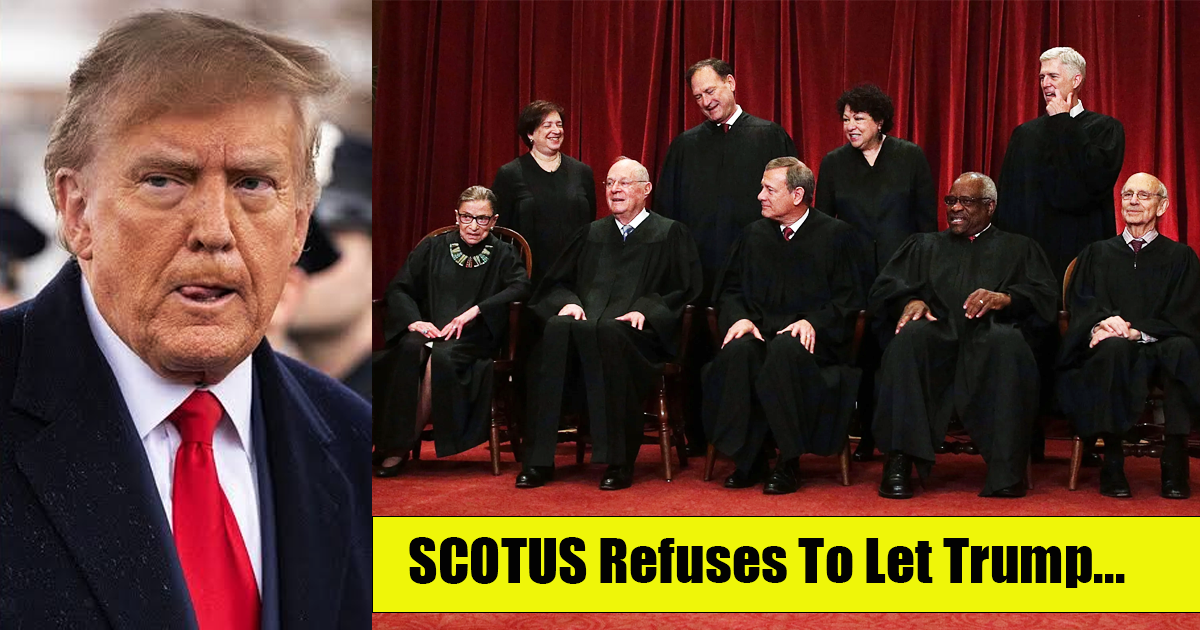
The U.S. Supreme Court has declined to grant an emergency request that would have allowed President Donald Trump to immediately remove the head of the U.S. Copyright Office while legal proceedings over the issue continue.
The Court’s decision does not resolve the underlying legal dispute or determine whether the president ultimately has the authority to dismiss the Copyright Office’s leader. Instead, the justices chose not to intervene on an emergency basis, allowing the case to proceed through the lower courts.
The dispute centers on the scope of presidential authority over federal officials and whether certain government positions are protected by laws that limit a president’s ability to remove them. The case is being closely watched because it could have broader implications for executive power and the independence of federal agencies and offices established by Congress.
Supporters of the emergency request argued that the president should have broad constitutional authority to remove executive branch officials in order to ensure accountability and effective management of the federal government. Opponents countered that Congress has created legal protections for some positions to preserve their independence from political influence, and that those protections should remain in place unless the courts rule otherwise.
By declining the emergency request, the Supreme Court did not issue a decision on the merits of the case or signal how it may rule if the dispute returns for full review. The action simply leaves the current leadership of the Copyright Office in place while the legal challenge continues.
The U.S. Copyright Office plays a central role in administering the nation’s copyright system, including processing copyright registrations, maintaining public records, and providing legal and policy guidance to Congress on intellectual property issues. As a result, questions surrounding its leadership have drawn attention from legal experts, creators, publishers, and technology companies.
Constitutional scholars say the case is part of a broader series of legal disputes concerning the limits of presidential authority over federal officials. Similar cases involving independent agencies have reached the Supreme Court in recent years, highlighting ongoing debates about the balance of power between the executive branch and Congress.
The lower courts are expected to continue considering the constitutional and statutory issues involved. Depending on the outcome, the case could eventually return to the Supreme Court, where the justices may provide a definitive ruling on the president’s authority over leadership of the U.S. Copyright Office.